
You probably don’t realize how much your CNC’s soul depends on its controller, not just the spindle or frame. A bad brain means bad cuts, no matter your machine’s hardware. So let’s walk through the ten controllers machinists actually praise, from GRBL shields to touchscreen powerhouses.
| RATTMMOTOR 4 Axis CNC Controller Kit | 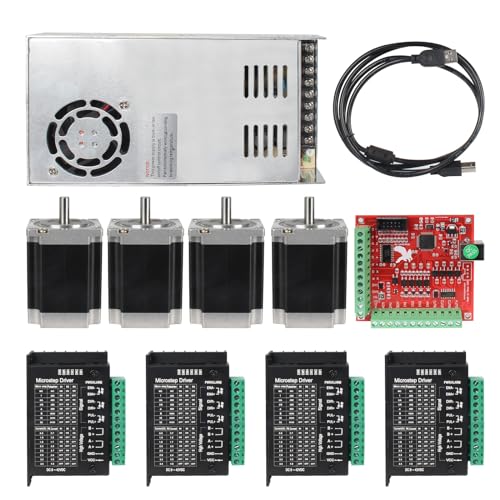 | Best for 4-Axis | Maximum Axes Supported: 4 axes | Maximum Pulse Frequency: 400 KHz | Input Voltage/Power Supply: 24V DC | VIEW LATEST PRICE | Read Our Analysis |
| CNCTOPBAOS 5 Axis DDCS Expert CNC Controller |  | Professional Grade | Maximum Axes Supported: 5 axes | Maximum Pulse Frequency: 1000 KHz | Input Voltage/Power Supply: 24V DC (two supplies) | VIEW LATEST PRICE | Read Our Analysis |
| Longruner GRBL CNC Shield Kit with Stepper Motors | 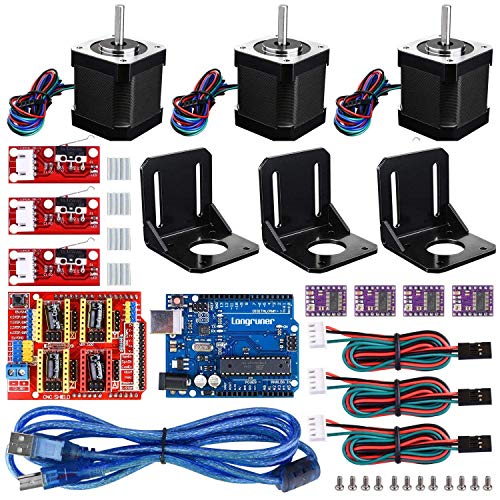 | Best for Beginners | Maximum Axes Supported: 3 axes (via GRBL shield) | Maximum Pulse Frequency: Not specified (GRBL standard ~30 KHz) | Input Voltage/Power Supply: 12V to 36V | VIEW LATEST PRICE | Read Our Analysis |
| CNCTOPBAOS 4 Axis Mach3 CNC Controller Board |  | Budget-Friendly Pick | Maximum Axes Supported: 4 axes | Maximum Pulse Frequency: 100 KHz | Input Voltage/Power Supply: 24V DC | VIEW LATEST PRICE | Read Our Analysis |
| 4-Axis USB CNC Offline Controller (7-Inch Touch) |  | Most Versatile | Maximum Axes Supported: 4 axes | Maximum Pulse Frequency: Not specified | Input Voltage/Power Supply: Not specified (USB powered) | VIEW LATEST PRICE | Read Our Analysis |
| CNCTOPBAOS 3 Axis GRBL USB CNC Controller Board | 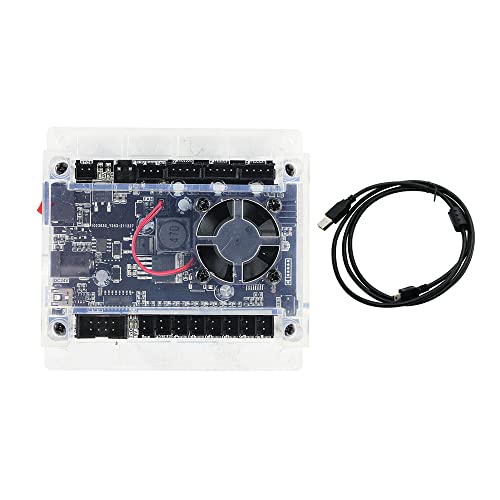 | Best Value | Maximum Axes Supported: 3 axes | Maximum Pulse Frequency: Not specified (GRBL 1.1f standard) | Input Voltage/Power Supply: 24V DC | VIEW LATEST PRICE | Read Our Analysis |
| CNCTOPBAOS 4 Axis CNC Offline Controller DDCSV4.1 | 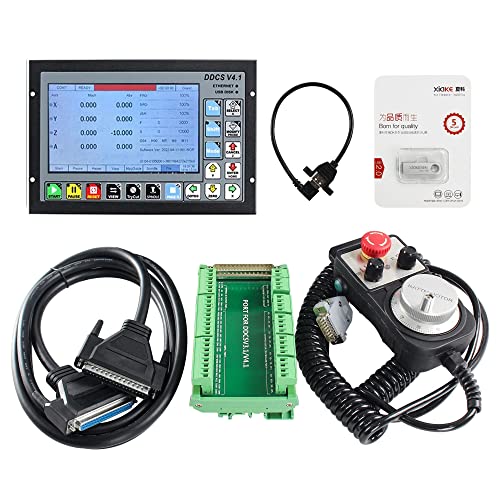 | Editor’s Choice | Maximum Axes Supported: 4 axes | Maximum Pulse Frequency: 500 KHz | Input Voltage/Power Supply: 24V DC | VIEW LATEST PRICE | Read Our Analysis |
| MKS DLC32 MAX CNC Controller 4 Axis |  | Most Compact | Maximum Axes Supported: 4 axes | Maximum Pulse Frequency: Not specified (ESP32 GRBL) | Input Voltage/Power Supply: Not specified | VIEW LATEST PRICE | Read Our Analysis |
| RATTMMOTOR 3 Axis Nema23 Stepper Motor Kit | 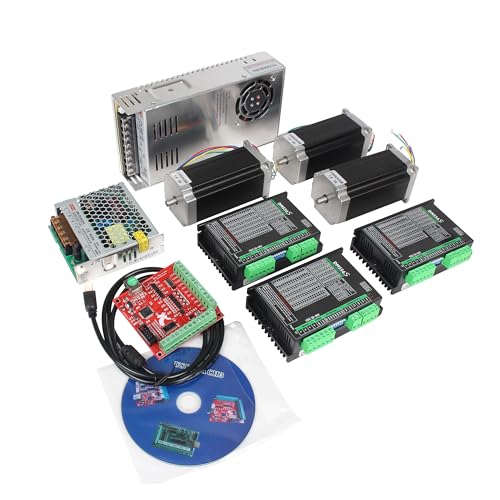 | Best Overall | Maximum Axes Supported: 4 axes | Maximum Pulse Frequency: Not specified (via Mach3 board) | Input Voltage/Power Supply: 36V DC (motor) + 24V DC (board) | VIEW LATEST PRICE | Read Our Analysis |
| CNCTOPBAOS 3 Axis GRBL Controller Board |  | Best Offline Controller | Maximum Axes Supported: 3 axes | Maximum Pulse Frequency: Not specified (GRBL 1.1f) | Input Voltage/Power Supply: 24V DC | VIEW LATEST PRICE | Read Our Analysis |
More Details on Our Top Picks
RATTMMOTOR 4 Axis CNC Controller Kit
If you’re tackling complex multi-axis projects, this kit won’t let you down. You get a complete 4 axis system with a control card that links with Mach3 software, outputting a crisp 400KHz pulse frequency for high accuracy. The Nema23 motors give you 270 oz-in of torque, and they run quietly with solid thermal stability. You’ll wire them up to the TB6600 drivers, which protect against shorts and overheating. Set your subdivisions with DIP switches from 1 to 32. Just connect those red, green, yellow, and blue wires to A+, A-, B+, B-. Simple.
- Maximum Axes Supported:4 axes
- Maximum Pulse Frequency:400 KHz
- Input Voltage/Power Supply:24V DC
- Control Software/Firmware:Mach3
- Display Type:No display (PC-based)
- Weight:6.3 mg (likely error; ~0.6 kg estimated)
- Additional Feature:Automatic homing/tool setting
- Additional Feature:Emergency stop/limit switches
- Additional Feature:Over-heat/current/short protection
CNCTOPBAOS 5 Axis DDCS Expert CNC Controller
Professional grade motion control demands serious hardware. You’re getting an ARM+FPGA combo here, where ARM handles the interface and code analysis while FPGA manages the pulse precision. That means up to 1MHz per axis across all five. No compromises.
You’ll need two separate 24VDC supplies: one for the controller system, another for IO and MPG ports. The 7-inch color LCD shows your workflow clearly, and those 40 keys let you control everything without a mouse.
- 24 isolated inputs, 21 outputs
- Analog spindle control from 0 to 10V or PWM
- Works with ArtCam, Fusion 360, and more
A 5-axis handwheel gives you manual precision. Just keep the ambient temp around 20°C for best performance.
- Maximum Axes Supported:5 axes
- Maximum Pulse Frequency:1000 KHz
- Input Voltage/Power Supply:24V DC (two supplies)
- Control Software/Firmware:Standard G-code (standalone)
- Display Type:7-inch full-color LCD
- Weight:2.7 kg
- Additional Feature:40 operation keys
- Additional Feature:24 isolated digital inputs
- Additional Feature:ARM+FPGA control framework
Longruner GRBL CNC Shield Kit with Stepper Motors
You’re starting out with CNC or 3D printing, and you want a complete, reliable kit that just works. The Longruner GRBL CNC Shield Kit delivers exactly that. It bundles an Arduino CNC board, updated V3.0 shield, DRV8825 drivers with aluminum heatsinks (handling up to 2.5A), Nema17 stepper motors, and mechanical endstops. All parts use premium materials for durability. You get 12V or 36V options, and the whole package weighs just 380 grams. Customer support responds within 24 hours if you hit a snag. Rated 4.5 stars from 226 reviews, this kit makes DIY projects straightforward for beginners and pros alike!
- Maximum Axes Supported:3 axes (via GRBL shield)
- Maximum Pulse Frequency:Not specified (GRBL standard ~30 KHz)
- Input Voltage/Power Supply:12V to 36V
- Control Software/Firmware:GRBL (via Arduino)
- Display Type:No display (Arduino shield)
- Weight:380 g
- Additional Feature:Arduino IDE compatible
- Additional Feature:DRV8825 motor driver
- Additional Feature:Heat sinks on drivers
CNCTOPBAOS 4 Axis Mach3 CNC Controller Board
The CNCTOPBAOS 4 Axis Mach3 Controller is our budget-friendly pick for hobbyists and small workshop owners who need reliable 4 axis control without breaking the bank. You’ll connect it via USB to any Windows XP, 7, 8, or 10 machine, and it works seamlessly with Mach3 software. For precision, it delivers a 100KHz step-pulse frequency to handle servo or stepper motors.
Key features include:
- 4 isolated relay outputs for external device control.
- 4 input ports for limit switches, estop, or probes.
- 0-10V spindle speed control output.
- A handwheel interface for manual jogging.
Just power it with 24V DC to isolate the USB connection, and you’re set for engraving, milling, or carving tasks. At 0.21 kg, it’s compact yet robust.
- Maximum Axes Supported:4 axes
- Maximum Pulse Frequency:100 KHz
- Input Voltage/Power Supply:24V DC
- Control Software/Firmware:Mach3
- Display Type:LED indicator only
- Weight:0.21 kg
- Additional Feature:0-10V spindle speed control
- Additional Feature:4 isolated relay outputs
- Additional Feature:Handwheel interface included
4-Axis USB CNC Offline Controller (7-Inch Touch)
For anyone running a desktop CNC router like a 3018 or 6040, this 4-Axis USB CNC Offline Controller (7-Inch Touch) is your most versatile upgrade. You’ll kiss the PC goodbye, thanks to full offline operation. That 7-inch IPS touchscreen (1024×600 resolution) gives you 150% more space than tiny 2.8-inch screens, and CTS technology means faster, more precise taps.
You get 4-axis control, tool path preview, custom macros, and spindle/probe settings all from your fingertips. The CNC-machined aluminum casing is tough, and at 680 grams, it’s easy to mount. Plus, you store files on a MicroSD card. No more wrestling with software, just plug it into your GRBL machine and start cutting. It’s that simple.
- Maximum Axes Supported:4 axes
- Maximum Pulse Frequency:Not specified
- Input Voltage/Power Supply:Not specified (USB powered)
- Control Software/Firmware:GRBL (offline)
- Display Type:7-inch IPS touchscreen
- Weight:680 g
- Additional Feature:7-inch IPS touch screen
- Additional Feature:CNC-machined aluminum casing
- Additional Feature:Tool path preview function
CNCTOPBAOS 3 Axis GRBL USB CNC Controller Board
CNCTOPBAOS 3 Axis GRBL USB CNC Controller Board shines as a smart upgrade for budget conscious CNC hobbyists. You’ll get solid compatibility with popular engravers like the 3018-PRO and 1610-PRO, supporting Nema17 and Nema23 steppers. It runs on 24VDC, so you’ll need that power supply and a USB connection, plus the CH340 driver install. For setup, open Candle or GrblControl, select the COM port, set baud rate to 115200, and click connect. Then, send $X to disengage or use the disengage button. Just confirm limit switches are off and the emergency stop is released first. It’s not plug-and-play, but it’s worth the effort!
- Maximum Axes Supported:3 axes
- Maximum Pulse Frequency:Not specified (GRBL 1.1f standard)
- Input Voltage/Power Supply:24V DC
- Control Software/Firmware:GRBL 1.1f
- Display Type:No display (PC-based)
- Weight:5 oz (142 g)
- Additional Feature:2-pin emergency stop port
- Additional Feature:Probe port included
- Additional Feature:Requires CH340 driver install
CNCTOPBAOS 4 Axis CNC Offline Controller DDCSV4.1
You’re after a standalone solution with serious multitasking muscle. The CNCTOPBAOS DDCSV4.1 delivers exactly that. This offline controller runs 2 to 4 axes with linear interpolation and any two axis circular interpolation, all powered by an ARM9 and FPGA chip combo hitting 500kHz per axis. You’ll appreciate the 7 inch TFT screen, 1024×600 resolution, and 17 operation keys for easy G code file transfers via USB or Ethernet, no size limits. It handles stepper or servo motors, including slave functions for gantry machines. Spindle control? Analog 0 10V or servo, your call. Plus 18 photoelectric isolated inputs and 3 outputs keep noise at bay. Just feed it 24VDC with 0.5A minimum per rail.
- Maximum Axes Supported:4 axes
- Maximum Pulse Frequency:500 KHz
- Input Voltage/Power Supply:24V DC
- Control Software/Firmware:Standalone (DDCS firmware)
- Display Type:7-inch TFT LCD
- Weight:Not specified
- Additional Feature:Ethernet file transfer support
- Additional Feature:18 isolated digital inputs
- Additional Feature:Servo spindle slave function
MKS DLC32 MAX CNC Controller 4 Axis
The MKS DLC32 MAX is your best bet if you want a compact 4 axis controller without sacrificing features. This GRBL 32-bit ESP32 shield breakout board upgrades your engraving machine with reliable 4-axis support. You get the board, USB cable, and endstops right in the box. Its LCD or OLED display keeps settings visible while you work. Operating temperature sits at a comfortable 20°C. Customer ratings hit 4.1 out of 5 stars across 16 reviews. Use it for DIY CNC projects or engraving upgrades. And if you spot a lower price elsewhere, report it through feedback channels. Just don’t expect smart home compatibility here.
- Maximum Axes Supported:4 axes
- Maximum Pulse Frequency:Not specified (ESP32 GRBL)
- Input Voltage/Power Supply:Not specified
- Control Software/Firmware:GRBL (32-bit ESP32)
- Display Type:LCD or OLED (optional)
- Weight:Not specified
- Additional Feature:ESP32 GRBL 32-bit controller
- Additional Feature:LCD or OLED display compatible
- Additional Feature:USB cable and endstops included
RATTMMOTOR 3 Axis Nema23 Stepper Motor Kit
Looking for a motor kit that handles virtually any CNC task without breaking the bank? The RATTMMOTOR 3 Axis Nema23 kit delivers serious torque. With 425 oz-in holding power from each hybrid 2-phase stepper, you’ll cut through materials smoothly. The DM556S drivers feature 32-bit DSP microstepping up to 51200 subdivisions, so you get ultra low noise even at medium speeds. You also get:
- USB Mach3 control board with 4-axis support (no driver install needed)
- 400W, 36V DC power supply for motors
- 24V supply for the board
This kit’s dual shaft Nema23 motors, four lead wiring, and clear A+/Red labeling make setup straightforward. And with a 4.8-star customer rating? You’re getting reliable performance without overpaying.
- Maximum Axes Supported:4 axes
- Maximum Pulse Frequency:Not specified (via Mach3 board)
- Input Voltage/Power Supply:36V DC (motor) + 24V DC (board)
- Control Software/Firmware:Mach3
- Display Type:No display (PC-based)
- Weight:Not specified
- Additional Feature:Dual shaft stepper motor
- Additional Feature:400W 36V switching power supply
- Additional Feature:32-bit DSP microstep technology
CNCTOPBAOS 3 Axis GRBL Controller Board
Offline control freedom sets this board apart. You ditch the computer by using an SD or TF card, directly running your CNC engraver or mill, like a 3018-PRO, without a tether. It’s a game changer for standalone jobs.
This upgraded GRBL 1.1F board handles Nema17 or Nema23 motors, keeping current between 1.5A and 2A per motor. You get dedicated ports for emergency stop, probes, and XYZ limit switches. Spindle control hits up to 20,000 RPM via PWM.
Use software like Candle or Universal Gcode Sender on Windows XP through 10. Power it with 24V DC. User reviews average 4.1 out of 5 stars, so machinists clearly approve.
- Maximum Axes Supported:3 axes
- Maximum Pulse Frequency:Not specified (GRBL 1.1f)
- Input Voltage/Power Supply:24V DC
- Control Software/Firmware:GRBL 1.1f
- Display Type:LCD or LED display
- Weight:8.1 oz (230 g)
- Additional Feature:SD/TF card offline storage
- Additional Feature:Supports up to 20,000 RPM spindle
- Additional Feature:ABS plastic housing included
Factors to Consider When Choosing a Controller for Cnc
Before you pick a controller, you’ve got to nail down your machine’s axis count first, since a 3‑axis board won’t run a 4‑axis rotary setup. Your pulse frequency determines how fast and smooth your steppers move, so match it to their rated speed or you’ll lose steps. And don’t forget software compatibility, motor type support, and your power supply needs; they’ll make or break your whole build!
Axis Count
One of the first things you’ll need to nail down is the axis count your controller must support. This number determines everything from basic 3-axis milling to complex 5-axis machining. Your controller must match your machine’s hardware exactly. Why? Because mismatched counts mean your axes simply won’t coordinate properly. More axes ramp up processing demands, which can hurt your system’s responsiveness and stability. So, pick the right number now to avoid future headaches. You don’t want to add extension boards later just because you skimped. Multi-axis controllers are non-negotiable for simultaneous linear and rotational moves. They give you that precise, complex motion you crave. Here’s a quick checklist:
- Count your motorized movement points.
- Match that number exactly to your controller.
- Avoid overbuying or underbuying.
Pulse Frequency
Now that you’ve locked in your axis count, it’s time to focus on pulse frequency. This little number controls how fast your controller sends signals to your motors. Higher pulse frequency means smoother, more precise motion. For high accuracy work, you want at least 400KHz. Anything less, and you’ll see visible stepping that kills surface finish quality.
Here’s what to look for:
- 400KHz or higher for detailed cuts and fine finishes.
- Lower frequencies cause jerky motion and resonance in stepper motors.
- Higher frequencies reduce that resonance, giving you better positional accuracy.
Your controller’s maximum pulse frequency directly limits how fast and detailed your complex machining can get. Don’t skimp here. A controller that can’t push enough pulses will bottleneck your entire machine, leaving you with rough edges and frustrated sighs. Choose wisely, and your CNC will sing.
Software Compatibility
Software compatibility can make or break your CNC workflow, so it’s a factor you’ll want to prioritize early. You’ll need a controller that plays nice with your design software, like Fusion 360 or MasterCam, to keep that design-to-machine flow seamless. And don’t overlook G-code support; it’s the universal language your controller must speak to run any program.
Check the firmware too. Whether it’s Mach3 or GRBL, it must vibe with your control software. Also, guarantee you’ve got a connection that works for you: USB, Ethernet, or SD card. A mismatched interface? That’s a headache you don’t need.
Finally, look for a user interface that integrates smoothly with your preferred software. It should feel intuitive, not like you’re wrestling with two different systems. Get this right, and you’ll save hours of frustration.
Motor Type Support
Before you pick a controller, make sure it supports the specific motor type your CNC machine uses, whether that’s stepper or servo. You’ll want to verify the controller can handle your motor’s voltage and current ratings too. Push it past those limits, and you risk damaging both components.
Check for multi axis support if you’re running 3, 4, or 5 axes. Anything less, and you’re stuck. Also confirm it works with your motor configuration, be it Nema17, Nema23, or a custom size. Don’t assume compatibility just because it looks right.
Look for features that matter. Microstepping support for smooth operation. Current regulation to prevent overheating. And if you’re using servos, feedback capabilities are non negotiable. That’s how you maintain position accuracy. A controller that nails these details will keep your machine humming without headaches.
Power Supply Needs
After making sure your controller plays nice with your motors, you can’t forget the power supply. It’s the heart of your setup, and you need it pumping steady juice. Don’t just grab any wall wart. Your controller’s spec sheet demands a specific voltage range, usually 12V to 36V DC. Stick to it. Overvoltage fries components, undervoltage causes stalls and g code errors. You’ll want a stable, reliable supply to avoid mid cut crashes. Some controllers even need dual power supplies: one for logic, another for motor drivers. That’s common with higher end gear. And make sure your power capacity covers all your motors, drivers, and any extras. Undersizing it leads to brownouts. So calculate your total current draw, add a 20% buffer, then buy a quality supply. Your CNC will thank you with clean, consistent cuts every time.
Inputs & Outputs
How do you make your CNC actually do what you want it to? It’s all about the inputs and outputs. You need isolated digital inputs to block electrical noise from your limit switches, probes, and emergency stop. Without that, you’ll get ghost triggers. For spindle control, don’t skip analog outputs. A 0-10V or PWM signal gives you variable speed and power.
And you can customize everything with dedicated programmable outputs. Here’s what they control:
- Tool changes
- Coolant flow
- Auxiliary device activation
But compatibility matters too. Make sure your controller supports multiple input/output protocols. That ensures you can swap components later without headaches. Short version: get enough I/O, keep it clean, and plan for upgrades. You’ll avoid a lot of frustration.