
What’s the point of a CNC machine if your designs don’t translate into flawless cuts? You need CAD software that bridges the gap between your idea and the bit hitting the material. But finding that one perfect program isn’t straightforward. Let’s cut through the noise, starting with a surprising contender you might overlook.
| SainSmart Genmitsu CNC Drawing Robot Module |  | Most Versatile | Compatibility: 42mm and 52mm spindle CNC machines | Material: Metal and plastic | Included Accessories: Drawing tool, 52mm adapter ring | VIEW LATEST PRICE | Read Our Analysis |
More Details on Our Top Picks
SainSmart Genmitsu CNC Drawing Robot Module
Meet the most versatile upgrade for your CNC setup. The SainSmart Genmitsu Drawing Robot Module turns your machine into an automated artist. You’ll nail custom lettering and intricate designs without manual tracing. Installation is a breeze, so you can expand your CNC’s capabilities fast.
This module works with both 42mm and 52mm spindle machines, fitting beginner and advanced rigs alike. Durable metal and plastic construction keeps it reliable. Plus, the included 52mm adapter ring guarantees seamless integration.
- Effortless automation for precise writing and detailed illustrations
- Supports artistic exploration with personalized projects
- 4.5 out of 5 stars from satisfied users
Your CNC is no longer just for cutting. It’s a multi functional creative powerhouse.
- Compatibility:42mm and 52mm spindle CNC machines
- Material:Metal and plastic
- Included Accessories:Drawing tool, 52mm adapter ring
- Function:Automated writing and drawing
- Installation:Easy installation, quick expansion
- Package Quantity:1 unit per package
- Additional Feature:42mm and 52mm compatible
- Additional Feature:Spindle mounting integration
- Additional Feature:Durable metal/plastic build
Factors to Consider When Choosing CAD Drawing for CNC Machine
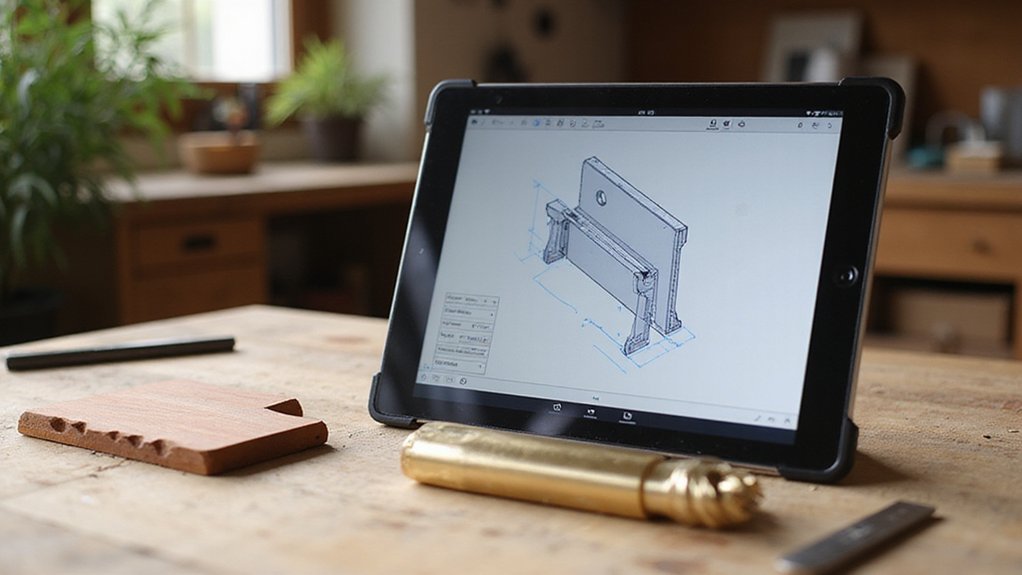
When you’re choosing a CAD drawing for your CNC machine, you need to start by checking software compatibility and file format support, or you’ll face frustrating conversion errors. Precision and accuracy are non-negotiable, since even a tiny error in your drawing can ruin your final cut. And don’t overlook user interface design and toolpath generation, because a smooth workflow saves you time and reduces mistakes.
Software Compatibility
Why does software compatibility matter so much for your CNC setup? Because your perfect design is useless if your machine can’t understand it. So first, check that your CAD program works with your CNC’s control software and firmware. No guesswork here; you need that direct handshake.
Next, verify the CAD offers integration or a direct connection to your controller. This keeps file transfer smooth and frustration low. Also, look for simulation features. You want to visualize toolpaths right inside the software, catching errors before you waste material.
And don’t stop there. The program must handle complex designs with precision, allowing deep customization for your specific projects. Remember, you’re aiming for flawless cuts, and that starts with software that talks fluently to your machine. Choose carefully, and you’ll save yourself major headaches down the line!
File Format Support
Since your CAD drawing needs to communicate directly with your CNC machine, file format support is where that conversation either flows or breaks down. You’ll want your software to export widely supported formats like DXF, DWG, or SVG. These vector-based files let your machine generate precise tool paths without guesswork.
But don’t assume one size fits all. Check your CNC machine’s documentation for its specific format requirements. Some machines demand proprietary formats, while others happily accept multiple options. Compatibility across formats streamlines your workflow, letting you move seamlessly from design to manufacturing.
And here’s a practical tip: some CAD programs automatically spit out CNC-ready G-code, saving you a conversion step. Others might need extra software to bridge the gap. So pick a tool that matches your machine’s language, and you’ll avoid frustrating file format headaches down the line!
Precision and Accuracy
Precision and accuracy are the backbone of any successful CNC project, and they start right in your CAD software. High precision ensures your design translates flawlessly to the machine, so you get a better final product. The software’s resolution directly impacts detail; low resolution means rough cuts and missed features.
Accurate drawings also minimize material waste. When your design is spot on, you avoid costly rework. Plus, precise CAD lets your CNC reliably follow complex toolpaths, even for intricate shapes. Remember those tolerance settings? They’re critical for tight dimensional accuracy. Set them too loose, and parts won’t fit. But get them right, and you’ll achieve flawless, repeatable results every time. That’s the difference between a good cut and a perfect one.
User Interface Design
If the learning curve feels steep, user interface design can make or break your experience with CAD software for CNC machines. You want an interface that lets you navigate complex drawings without a fight. Intuitive features like drag-and-drop tools and customizable toolbars speed up your workflow immensely. Look for clear visual representations and real-time feedback, so you catch errors as you adjust designs. This reduces do-overs considerably.
Compatibility with input devices matters too. Using a stylus or tablet can streamline your drawing process, giving you more control. Easy access to editing functions and layered options lets you modify designs without deep technical knowledge. You don’t need to be a programmer; just click and adjust. Choose software that feels natural, not frustrating. That’s how you get flawless cuts faster!
Toolpath Generation
How does toolpath generation influence your decision when choosing CAD software for CNC machines? It’s the difference between a flawless cut and a wasted block of material. Accurate toolpaths ensure your CNC follows precise paths, minimizing errors and waste. But that’s just the start: advanced software enhances routing to slash machining time, and it offers cutting strategies like contour, pocket, or drill paths that directly impact your final design’s quality and complexity. Avoid tool crashes with collision detection features, and don’t overlook tool orientation, feed rates, and depth of cut for maximum results and longer tool life. You get this efficiency without the headache of manual tweaking. So, when you’re comparing options, remember that smart toolpath generation isn’t a bonus—it’s your ticket to reliable, cost-effective production. Choose wisely.
Learning Curve
Because the learning curve of CAD software directly impacts how quickly you’ll be making parts, it’s one of the biggest factors to weigh early on. A steep curve pushes your first real project weeks out, while an intuitive UI lets you draw within days. So, what smoothes the climb?
- Interface simplicity matters most. Look for drag-and-drop tools and visual previews, not dense menus.
- Built-in tutorials speed mastery. You want step-by-step guides that assume zero prior CAD knowledge.
- Community support saves headaches. Active forums mean you’ll find answers fast when you get stuck.
Your familiarity with basic CNC operations also cuts the learning time. And don’t overthink it. A program you can start drawing with today beats a complex powerhouse you’ll still be learning next month. Pick the tool that gets you cutting sooner!
Hardware Integration
When you’re choosing CAD software for your CNC machine, hardware integration can make or break your workflow. Start by ensuring it exports files like G-code or standard formats such as DXF and STL, directly compatible with your machine’s control system. You’ll want precise dimensioning and layer management for accurate cuts every time.
Look for seamless CAM integration to smooth the jump from design to toolpath generation. Check that the software supports your specific hardware capabilities – whether that’s engraving, carving, or 3D modeling. And don’t overlook plugins for automation and scripting; these handle multi-axis setups or drawing robots with ease. Skipping these checks means risking a software that fights your machine instead of dancing with it!
Cost vs. Features
Why does the price tag on CAD software seem to jump so dramatically? You’re paying for features that directly impact your CNC’s precision. Higher-cost options unlock complex 3D modeling, extensive toolpaths, and simulation tools that catch errors before metal hits the bit. Budget-friendly CAD gives you basic drawing skills, but you’ll struggle with intricate parts or fine details. Licensing also matters: subscriptions spread out costs, while one-time payments hit hard upfront. Additional features like automation and controller compatibility usually come at a premium. So, ask yourself: does your project need that extra power? For simple signs, a cheaper tool works fine. But for complex, multi-axis cuts, those extra dollars save you time and material waste. Balance your budget against the complexity you’ll actually produce.