
You might think all NEMA 17 drivers do the same job, but the difference between skipping steps and flawless motion comes down to microstepping, current handling, and thermal management. Get the wrong match, and your CNC or 3D printer will stutter. Let’s look at nine drivers that keep things smooth.
| TB6600 Stepper Motor Driver 3-Pack (5A) |  | Best Value | Input Voltage Range: 9V-40V DC | Maximum Output Current: 4A peak | Microstepping Support: 1, 2/A, 2/B, 4, 8, 16, 32 | VIEW LATEST PRICE | Read Our Analysis |
| Stepper Motor Driver for Nema 17/23/34 | 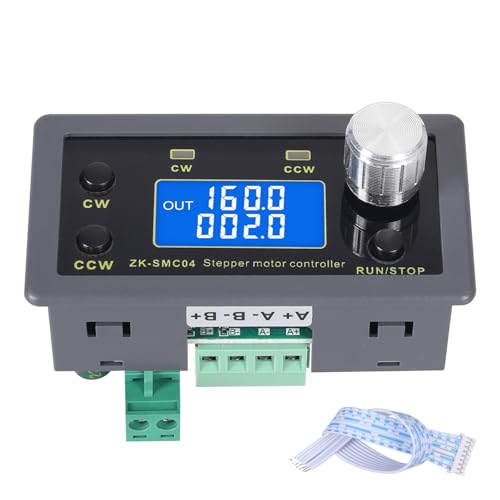 | Most Versatile | Input Voltage Range: 10V-30V DC | Maximum Output Current: 6.6A peak | Microstepping Support: 1/64 microstepping | VIEW LATEST PRICE | Read Our Analysis |
| CNC TB6600 Stepper Driver with Nema 17 Motor |  | Best Starter Kit | Input Voltage Range: 9V-42V DC | Maximum Output Current: 4.0A max | Microstepping Support: Up to 32 divisions (6 modes) | VIEW LATEST PRICE | Read Our Analysis |
| STEPPERONLINE TE Series Digital Stepper Driver |  | Professional Choice | Input Voltage Range: 24V-50V DC | Maximum Output Current: 4.2A peak | Microstepping Support: 16 resolutions (200 to 25,000 microsteps) | VIEW LATEST PRICE | Read Our Analysis |
| Stepper Motor Driver TB6600 4A CNC Controller |  | Budget-Friendly | Input Voltage Range: 9V-42V DC | Maximum Output Current: Under 4A | Microstepping Support: Not specified | VIEW LATEST PRICE | Read Our Analysis |
| HiLetgo A4988 Stepper Motor Driver Module 5-Pack |  | Best for Beginners | Input Voltage Range: Up to 35V DC | Maximum Output Current: ±1.2A | Microstepping Support: Full, half, quarter, eighth, sixteenth | VIEW LATEST PRICE | Read Our Analysis |
| Stepper Motor Driver for NEMA 17 23 CNC |  | Compact Control | Input Voltage Range: 30V DC | Maximum Output Current: Not specified | Microstepping Support: Not specified | VIEW LATEST PRICE | Read Our Analysis |
| Stepper Motor Driver Controller with LCD Display |  | Best All-in-One | Input Voltage Range: 10V-30V DC | Maximum Output Current: 6.6A peak | Microstepping Support: 8 to 64 subdivisions | VIEW LATEST PRICE | Read Our Analysis |
| Nema 17 Stepper Motor with Integrated Driver |  | Space-Saver Pick | Input Voltage Range: 12V-24V DC | Maximum Output Current: 1.7A rated | Microstepping Support: 1.8° step angle (200 steps/rev) | VIEW LATEST PRICE | Read Our Analysis |
More Details on Our Top Picks
TB6600 Stepper Motor Driver 3-Pack (5A)
For budget conscious hobbyists and small shop owners looking to power multiple NEMA 17s without breaking the bank, the TB6600 3 pack delivers remarkable value. You get three units, each supporting up to 4A peak current and a wide 9V to 40V input range. That’s enough for most CNC mills, laser engravers, or pick and place machines.
And customization is a breeze. Six DIP switches let you dial in 8 current levels and 7 microstepping modes, from full step up to 32 microsteps. Plus, high speed optocoupler isolation fights signal interference. Overheat, overcurrent, and reverse polarity protection keep your setup safe. Just don’t exceed 45°C ambient temperature. At roughly 0.2 kg each, they’re compact workhorses.
- Input Voltage Range:9V-40V DC
- Maximum Output Current:4A peak
- Microstepping Support:1, 2/A, 2/B, 4, 8, 16, 32
- Compatible Motor Sizes:NEMA 17, 42, 57
- Protection Features:Overheat, overcurrent, reverse polarity, short circuit
- Display/User Interface:DIP switches for settings
- Additional Feature:High-speed optocoupler isolation
- Additional Feature:Six DIP switch configuration
- Additional Feature:Automatic semi-flow cooling
Stepper Motor Driver for Nema 17/23/34
The most versatile all-in-one driver on our list works with Nema 17, 23, and 34 motors. You’ll get a powerful 6.6A output and a wide 10-30V DC input, perfect for CNC machines, 3D printers, or robotic arms. It combines driver and controller functions, so you can skip extra hardware.
Here’s what you can do with it:
- Control forward/reverse manually via button or potentiometer.
- Pick from 15 built-in working modes: follow mode, jog control, cycle with set distance, and more.
- Monitor speed, delay, and cycles on the HD LCD display.
- Use TTL serial for PLC or PC integration.
Plus, it remembers your settings after power loss. For industrial automation, this driver’s a powerhouse!
- Input Voltage Range:10V-30V DC
- Maximum Output Current:6.6A peak
- Microstepping Support:1/64 microstepping
- Compatible Motor Sizes:NEMA 17, 23, 34
- Protection Features:Not specified
- Display/User Interface:HD LCD display, buttons, potentiometer
- Additional Feature:15 fixed working modes
- Additional Feature:Power-off memory storage
- Additional Feature:Forward/reverse button control
CNC TB6600 Stepper Driver with Nema 17 Motor
CNC TB6600 Stepper Driver with Nema 17 Motor makes a solid starting point if you’re building your first CNC or 3D printer. This kit bundles the driver, motor, and connecting wire, so you’re ready to go. You can run it on a 9V to 42V DC supply, and it pushes up to 4.0A. That’s plenty of torque for small engraving or labeling jobs. It includes protection against overheating, overcurrent, and reverse polarity, so you won’t fry your gear. Plus, it supports 4, 6, and 8-wire motors, giving you wiring flexibility. Just keep it under 400 RPM for reliable performance.
- Input Voltage Range:9V-42V DC
- Maximum Output Current:4.0A max
- Microstepping Support:Up to 32 divisions (6 modes)
- Compatible Motor Sizes:NEMA 17, 23, 24 (42mm-60mm)
- Protection Features:Overheating, overcurrent, undervoltage, reversal prevention
- Display/User Interface:Not specified
- Additional Feature:Includes Nema 17 motor
- Additional Feature:H-bridge bipolar constant drive
- Additional Feature:Undervoltage protection included
STEPPERONLINE TE Series Digital Stepper Driver
If you’re building a professional CNC, 3D printer, or automation rig, you’ll want a driver that won’t let you down. The STEPPERONLINE TE Series delivers exactly that. It handles Nema 17 and 23 motors, both 2-phase and 4-phase, with peak current from 1.0A to 4.2A and 24-50VDC input.
You get 16 microstep resolutions up to 25,000 microsteps, plus 200kHz pulse input for speed. Anti-resonance technology reduces mid-range vibrations and optimizes torque. It also features motor winding open circuit detection, over-voltage and over-current protections, and automatic idle-current reduction. Optically isolated inputs (5V-24V) make integration simple. Soft-start prevents power surges, too.
Simply put, it’s a reliable workhorse for demanding builds.
- Input Voltage Range:24V-50V DC
- Maximum Output Current:4.2A peak
- Microstepping Support:16 resolutions (200 to 25,000 microsteps)
- Compatible Motor Sizes:NEMA 17, 23
- Protection Features:Over-voltage, over-current, idle-current reduction, open circuit detection
- Display/User Interface:Not specified
- Additional Feature:Motor winding open circuit detection
- Additional Feature:Anti-resonance vibration reduction
- Additional Feature:Auto motor identification/configuration
Stepper Motor Driver TB6600 4A CNC Controller
Looking for a driver that won’t bust your budget? The TB6600 4A CNC Controller delivers solid reliability without breaking the bank. It supports your NEMA 17 or NEMA 23 motors, handling voltages from 9V to 42V and currents under 4A.
You’ll find it works perfectly with:
- 42mm, 57mm, or 86mm motors (2, 4, 6, or 8 wires)
- Laser cutters, engraving machines, and X-Y-Z tables
The LCD/LED display keeps you informed, and the plastic housing keeps it lightweight at just 0.21 kg. With a stellar 4.5 star rating from 35 reviewers, it’s a proven choice for small to medium automation projects. And EBYSAICO backs it with warranty support, too!
- Input Voltage Range:9V-42V DC
- Maximum Output Current:Under 4A
- Microstepping Support:Not specified
- Compatible Motor Sizes:NEMA 17, 23 (42mm, 57mm, 86mm)
- Protection Features:Not specified
- Display/User Interface:LCD/LED display
- Additional Feature:Supports 86mm motor types
- Additional Feature:Dynamic voltage 9V-42V
- Additional Feature:LCD/LED display included
HiLetgo A4988 Stepper Motor Driver Module 5-Pack
You’re just starting out with stepper motors, and you want a reliable, budget friendly solution that won’t trip you up. Grab the HiLetgo A4988 5 Pack and you’ll have five drivers ready to go, each with a heat sink for peak performance at up to 35V and ±1.2A. You can dial in exact current via the potentiometer, and choose from five step resolutions: full, half, quarter, eighth, or sixteenth step. It’s perfect for 3D printers, CNC, or engraving machines. Plus, protection features like thermal shutdown keep you safe. You’ll get stable, steady motion without skipping a beat.
- Input Voltage Range:Up to 35V DC
- Maximum Output Current:±1.2A
- Microstepping Support:Full, half, quarter, eighth, sixteenth
- Compatible Motor Sizes:General stepper motors
- Protection Features:Over-temperature, under-voltage lockout, crossover-current
- Display/User Interface:Potentiometer for current control
- Additional Feature:Five selectable step resolutions
- Additional Feature:Intelligent chopping current control
- Additional Feature:Crossover-current protection
Stepper Motor Driver for NEMA 17 23 CNC
The BANRIA 4257 provides compact control for your CNC or automation project. It’s an integrated module that combines a stepper motor controller and driver specifically for NEMA 17 and 23 motors. You’ll appreciate its high-definition LCD, which displays critical parameters like speed, delay, and cycle times. Adjust settings easily and they’ll stay saved for precise control. It supports four control modes plus nine preset programs, covering forward, reverse, delay, loop, self-locking, and speed rotation. Direction control works via buttons or potentiometer, and you can switch modes automatically. It handles speeds up to 999.9 RPM at 30 volts. Weighing just 64 grams, it’s built with copper components for reliability. Rated 4.3 stars from 191 reviews, it’s a smart, versatile choice!
- Input Voltage Range:30V DC
- Maximum Output Current:Not specified
- Microstepping Support:Not specified
- Compatible Motor Sizes:NEMA 17, 23
- Protection Features:Not specified
- Display/User Interface:HD LCD display, buttons, potentiometer
- Additional Feature:Nine default preset programs
- Additional Feature:UART command control support
- Additional Feature:Speed control up to 999.9 RPM
Stepper Motor Driver Controller with LCD Display
Every automator or CNC builder needs a setup that just works, and that’s where this driver hits its stride. It’s a compact all-in-one controller, LCD display, and high-performance drive for NEMA 17, 23, or 34 motors. You get 15 pre-set modes like Jog, Cycle, and Delay, so you’re not stuck programming from scratch. The menu-driven interface with buttons makes configuration a breeze. Plus, you can run it standalone or connect via TTL serial to your PLC, PC, or Arduino. With a 6.6A peak current and 200kHz pulse response, you’ll get smooth, precise motion. Input reverse protection keeps your setup safe.
- Input Voltage Range:10V-30V DC
- Maximum Output Current:6.6A peak
- Microstepping Support:8 to 64 subdivisions
- Compatible Motor Sizes:NEMA 17, 23, 34 (42, 57, 86 series)
- Protection Features:Input reverse connection protection
- Display/User Interface:LCD display, menu-driven navigation
- Additional Feature:Remote TTL serial control
- Additional Feature:Menu-driven navigation interface
- Additional Feature:Best seller in industrial category
Nema 17 Stepper Motor with Integrated Driver
Need a space-saver pick for your NEMA 17 setup? This integrated driver model blends motor and controller into one compact 42x42x64mm package. You’ll love the 0.55Nm holding torque perfect for 3D printers or CNC machines, especially when space is tight. It operates best on 12–24V DC, with a 1.8° step angle giving you 200 precise steps per revolution. Just connect the black (A+), green (A-), red (B+), and blue (B-) wires, and you’re ready to go. Keep speed under 600 RPM to avoid torque drop. It’s a reliable, plug-and-play solution for demanding automation projects.
- Input Voltage Range:12V-24V DC
- Maximum Output Current:1.7A rated
- Microstepping Support:1.8° step angle (200 steps/rev)
- Compatible Motor Sizes:NEMA 17 only
- Protection Features:Dielectric strength 500V AC, insulation class UL B
- Display/User Interface:Not specified
- Additional Feature:Integrated driver built-in
- Additional Feature:0.55Nm holding torque
- Additional Feature:Recommended speed 0-600 RPM
Factors to Consider When Choosing a Driver for Nema 17 Stepper Motor
When you’re picking a driver for your NEMA 17, you first need to match its current output to your motor’s rated amps, because too little power means lost steps and too much can fry the coils. Don’t forget voltage compatibility either; a driver that can handle a higher supply voltage gives you better torque at high speeds, while microstepping resolution lets you dial in smoother motion for quieter prints or precise cuts. And make sure the driver physically fits your motor’s frame size, plus check cooling requirements since a tiny heatsink can’t handle sustained loads without overheating.
Current Output Ratings
Since a mismatch here can ruin your whole project, getting the current output rating right is your first real decision. You’ll want a driver that matches or sits slightly below your Nema 17’s rated current. Why? Because an underpowered driver causes skipped steps and lost accuracy, while overcurrent risks overheating both motor and driver.
Look for adjustable current control. That’s your safety net. It lets you dial in the exact current for ideal torque and holding strength, especially during high loads or position holds. And remember, different microstepping modes might need you to tweak that setting. A slight adjustment ensures smooth, stress free operation.
Voltage Compatibility
Because your motor’s voltage and your driver’s voltage need to play nice together, voltage compatibility is just as critical as current. You’ll want to match your driver’s voltage range to your power supply, typically 12V to 24V for most Nema 17 applications. Running a driver below your motor’s rated voltage? You’ll lose torque and performance fast, no two ways about it. But don’t think you can just crank it up. Exceeding the driver’s max voltage invites disaster: fried components and a dead project.
Confirm the driver supports your motor’s rated current at that chosen voltage. This keeps things safe and prevents overheating. Matching input voltage with your motor’s operating voltage optimizes efficiency and extends the lifespan of both pieces. Get this right, and you’ll avoid a whole lot of headaches down the road.
Microstepping Resolution
Microstepping resolution is where things start to get really interesting as you dial in performance for your Nema 17 setup. You’ll find common modes like 1/2, 1/4, 1/8, 1/16, and 1/32 steps, with finer settings giving you smoother, more precise movements. This division of each full step into smaller increments drastically reduces vibration and noise, so your motor runs quieter and more consistently.
But don’t just crank it to the highest setting. Exceeding your project’s precision needs wastes current and saps torque, actually hurting performance. Your driver’s internal circuitry and pulse input frequency also limit the maximum resolution it can handle. Choose a sweet spot that balances smoothness with torque, and you’ll get reliable, skip‑free operation every time. That’s the real trick for your build.
Motor Size Support
Now that you’ve dialed in your microstepping resolution, it’s time to make sure your driver actually fits the motor it’s driving. You need physical and electrical compatibility, plain and simple. Start with the size: NEMA 17 motors are 42x42mm, so your driver should match that footprint or at least mount cleanly without interfering with your frame.
Next, check the driver’s current rating. It must meet or exceed your motor’s rated current, typically up to 2A or 4A. If it’s lower, you’ll lose torque. Also verify voltage support, usually 12V to 24V, to keep things humming properly.
Don’t forget about inductance and resistance. Your driver must handle both to avoid overheating. Finally, confirm it supports microstepping modes that align with your motor’s step angle for smooth, skip free motion. Match these specs, and you’re golden.
Cooling Requirements
Since you’re pushing your Nema 17 motor driver to higher currents—especially beyond 2A—you’ve got to keep it cool. Overheating isn’t just a nuisance; it can trigger thermal shutdowns or even damage components, slashing reliability and lifespan. Many drivers ship with heatsinks, but you might need more. For continuous operation, add a cheap fan to boost airflow and drop temps considerably.
Your cooling efficiency hinges on two things: ambient temperature and air circulation around the board. Cramped, hot enclosures? That’s a problem. Tailor your solution to your driver’s power dissipation and your workspace’s environment. A simple step: mount the driver where air moves freely. Good cooling isn’t optional when you’re pulling heavy loads—it’s your ticket to consistent, trouble-free performance without the meltdowns.
Protection Features
Unless something goes wrong, your Nema 17 driver should just work. Protection features are your safety net, guarding against real-world mishaps. You want overcurrent, overheat, and short circuit protection to prevent damage during operation. Many drivers include thermal sensors that automatically shut down or reduce current when temperatures exceed safe thresholds. Reversal protection saves your motor and circuitry if you accidentally swap power supply polarity. And undervoltage lockout prevents malfunction when your supply voltage dips too low.
These built-in safety nets boost reliability and lifespan, especially in demanding applications. They handle electrical faults and overheating before you even notice. So, look for a driver with these features. It’s a small investment for peace of mind, ensuring your project runs smoothly without unexpected failures.
Control Signal Inputs
Protection features keep your driver safe from electrical mishaps, but control signal inputs are what let you actually talk to the motor. You’ll need TTL compatible signals, usually 3.3V or 5V, for proper digital communication. Optically isolated inputs shield your control system from voltage spikes and noise, a lifesaver in noisy environments. Precise PWM timing on specific pins handles microstepping and speed control, so don’t rush the wiring.
You’ve got multiple control modes, like step/direction signals, making integration with Arduino or Raspberry Pi a breeze. But watch your signal levels. Match them exactly to avoid damage or erratic moves. A quick checklist:
- Verify voltage compatibility (3.3V vs 5V).
- Use shielded wires for longer runs.
- Double check pin assignments on your microcontroller.
Get it right, and you’ll command your motor with zero hesitation.