
Ready to ditch the jitter and get silky smooth motion from your CNC or 3D printer? You’re in the right place. Choosing the right stepper driver is the difference between a project that works and one that *performs*. Let’s break down the ten models precision builders trust most.
| Stepper Motor Driver for NEMA 17/23/34 | 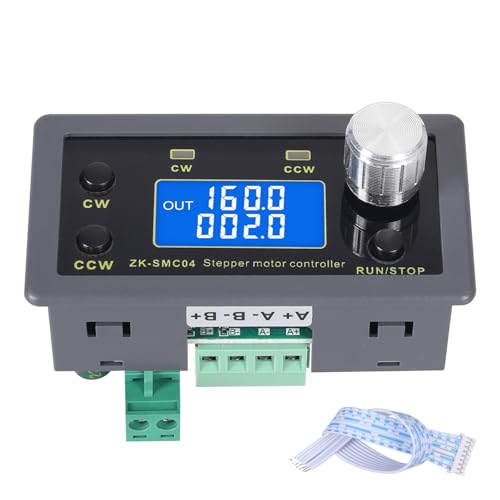 | Best All-in-One | Maximum Output Current: 6.6A | Input Voltage Range: 10-30V DC | Microstep Resolution Options: 1/64 | VIEW LATEST PRICE | Read Our Analysis |
| HiLetgo A4988 Stepper Motor Driver Module 5pcs |  | Budget Starter Pack | Maximum Output Current: 1.2A | Input Voltage Range: Up to 35V | Microstep Resolution Options: Full, 1/2, 1/4, 1/8, 1/16 | VIEW LATEST PRICE | Read Our Analysis |
| EASON TB6600 Stepper Motor Driver 4A DC9-42V |  | Subdivision Master | Maximum Output Current: 4A | Input Voltage Range: 9-42V DC | Microstep Resolution Options: 1/1 to 1/32 (32 options) | VIEW LATEST PRICE | Read Our Analysis |
| TB6600 Stepper Motor Driver (4A 9-42V) |  | Reliable Workhorse | Maximum Output Current: 4A | Input Voltage Range: 9-42V | Microstep Resolution Options: Not specified | VIEW LATEST PRICE | Read Our Analysis |
| Stepper Motor Driver Controller for NEMA 17/23 |  | Best For Beginners | Maximum Output Current: Not specified | Input Voltage Range: 30V | Microstep Resolution Options: Not specified | VIEW LATEST PRICE | Read Our Analysis |
| DC 5-30V Stepper Motor Driver Controller Board |  | Most Compact | Maximum Output Current: 4A | Input Voltage Range: 5-30V DC | Microstep Resolution Options: Not specified | VIEW LATEST PRICE | Read Our Analysis |
| ELEGOO 5V Stepper Motor with Driver Board |  | Hobbyist Favorite | Maximum Output Current: Not specified (5V motor) | Input Voltage Range: 5V | Microstep Resolution Options: Not specified (28BYJ-48 motor) | VIEW LATEST PRICE | Read Our Analysis |
| TB6600 Stepper Motor Driver for CNC & 3D Printers |  | Best Value | Maximum Output Current: 4.0A peak | Input Voltage Range: 9-40V DC (24V recommended) | Microstep Resolution Options: 1, 2, 4, 8, 16, 32 (8 selectable) | VIEW LATEST PRICE | Read Our Analysis |
| TB6600 Stepper Motor Driver 5A CNC Controller |  | Triple Pack Value | Maximum Output Current: 4A peak | Input Voltage Range: 9-40V DC | Microstep Resolution Options: 1, 2/A, 2/B, 4, 8, 16, 32 | VIEW LATEST PRICE | Read Our Analysis |
| STEPPERONLINE TE Digital Stepper Driver 1.0-4.2A |  | Professional Grade | Maximum Output Current: 4.2A peak | Input Voltage Range: 24-50V DC | Microstep Resolution Options: 200 to 25,000 microsteps (16 resolutions) | VIEW LATEST PRICE | Read Our Analysis |
More Details on Our Top Picks
Stepper Motor Driver for NEMA 17/23/34
If you’re building or upgrading a CNC machine, 3D printer, or robotic arm, this all-in-one controller and driver for NEMA 17, 23, and 34 steppers is your go-to. It pumps out a hefty 6.6A and accepts a wide 10-30V DC input, so you’ve got serious power for industrial automation or robotics. Control is a breeze with forward/reverse rotation and 15 built-in working modes, including follow mode and jog control. You can switch direction manually or let preset cycles handle it. An HD LCD display lets you tweak speed, delay, and cycle counts in real time. Plus, micro-stepping at 1/64 gives you silky smooth movement, and power-off memory saves your settings.
- Maximum Output Current:6.6A
- Input Voltage Range:10-30V DC
- Microstep Resolution Options:1/64
- Compatible Motor Types:Nema 17, 23, 34 (unipolar two-phase, 4-wire)
- Protection Features:Not specified
- User Interface Type:HD LCD display, buttons, potentiometer
- Additional Feature:Power-off memory storage
- Additional Feature:Manual button/potentiometer control
- Additional Feature:15 fixed working modes
HiLetgo A4988 Stepper Motor Driver Module 5pcs
The HiLetgo A4988 5-pack is the best choice for budget-conscious makers building their first 3D printer or CNC machine. You get five modules, each with PIN connectors and heat sinks, so you’ve got spares or can run multiple axes. They handle up to 35V and ±1.2A, but you’ll want those sinks installed for heavy loads. The adjustable current control lets you dial in the perfect torque via the onboard potentiometer. Plus, you can pick from five step resolutions: full, half, quarter, eighth, or sixteenth-step. Protection features like thermal shutdown and crossover-current safety keep your build reliable. Just wire up the step and direction pins to your controller, and you’re moving!
- Maximum Output Current:1.2A
- Input Voltage Range:Up to 35V
- Microstep Resolution Options:Full, 1/2, 1/4, 1/8, 1/16
- Compatible Motor Types:Stepper motors for 3D printers/CNC
- Protection Features:Over-temperature, under-voltage lockout, crossover-current
- User Interface Type:DIP switches, potentiometer
- Additional Feature:Five selectable step resolutions
- Additional Feature:Intelligent chopping current control
- Additional Feature:Includes heatsinks included
EASON TB6600 Stepper Motor Driver 4A DC9-42V
You need a stepper motor driver that handles precision without the headache. The EASON TB6600 delivers exactly that, with a beefy 4A current rating and a wide 9V to 42V input range. It’s built for NEMA 17 and 23 motors, plus 42 and 57 types with 4, 6, or 8 wires. You get 32 microstep resolution options, from 1/1 to 1/32, so you can dial in smooth motion for your CNC router or laser engraver. And it’s tough: over-voltage, under-voltage, over-current, and short-circuit protections keep things safe. The aluminum heat sink handles heat like a champ, so you can run it hard without worry.
- Maximum Output Current:4A
- Input Voltage Range:9-42V DC
- Microstep Resolution Options:1/1 to 1/32 (32 options)
- Compatible Motor Types:NEMA 17, 23 (42/57 type, 2/4-phase, 4/6/8-wire)
- Protection Features:Over-voltage, under-voltage, over-current, short-circuit
- User Interface Type:DIP switches
- Additional Feature:Upgraded protective plastic cover
- Additional Feature:32 microstep resolution options
- Additional Feature:Rugged metallic enclosure
TB6600 Stepper Motor Driver (4A 9-42V)
For hobbyists and makers building CNC machines or automated tools, this TB6600 driver is a reliable workhorse that handles NEMA 17 and 23 motors with ease. You’ll power it with 9V to 42V DC, and it smoothly drives up to 4A per phase. It’s perfect for your X-Y-Z tables, laser cutters, or pick-and-place gear. With a 4.5-star average from 35 reviews, you’re getting a solid upgrade for small to medium automation. Its plastic housing keeps it lightweight (0.21 kg), and it works with 2, 4, 6, or 8 wire motors. Just set it up, and you’re ready to cut or engrave without fuss.
- Maximum Output Current:4A
- Input Voltage Range:9-42V
- Microstep Resolution Options:Not specified
- Compatible Motor Types:NEMA 17, 23 (42/57/86mm, 2/4/6/8-wire)
- Protection Features:Not specified
- User Interface Type:LCD/LED display
- Additional Feature:Supports 86mm motor types
- Additional Feature:LCD/LED display included
- Additional Feature:Dynamic voltage 9-42V
Stepper Motor Driver Controller for NEMA 17/23
Pair this stepper motor driver controller with a NEMA 17 or 23 motor, and you’ve got a straightforward setup for CNC or DIY automation projects. It’s an integrated controller and driver, so you’re saving space and complexity. You’ll control direction easily with a button or potentiometer. It even auto-switches based on your chosen mode.
You get four control modes: built-in parameters, external buttons, driver control, or UART commands. That’s flexibility. Plus, it packs nine preset programs like Forward, Reverse, Delay, and Self-locking. You can dial in speeds up to 999.9 RPM and adjust delay or cycle times precisely. The LCD screen shows everything clearly, and it remembers your settings. At 30V and 64 grams, it’s compact but capable.
- Maximum Output Current:Not specified
- Input Voltage Range:30V
- Microstep Resolution Options:Not specified
- Compatible Motor Types:NEMA 17, 23
- Protection Features:Not specified
- User Interface Type:HD LCD display, buttons, potentiometer
- Additional Feature:Nine default preset programs
- Additional Feature:Speed control up to 999.9 RPM
- Additional Feature:Four control modes supported
DC 5-30V Stepper Motor Driver Controller Board
Need a precise controller that’s also the most compact option for tight spaces? The DC 5-30V Stepper Motor Driver Controller Board hits that sweet spot. It’s a versatile 4A driver with reverse pulse capabilities, letting you dial in delay, speed, angle, and distance via the LCD display and physical buttons. You get TTL serial communication for PLC integration, plus auto or manual control modes. It weighs just 0.09 kg, so it’s a breeze to fit into robotics or DIY automation builds. Users rate it 4.2 out of 5 stars. And with a solid warranty, you’re covered.
- Maximum Output Current:4A
- Input Voltage Range:5-30V DC
- Microstep Resolution Options:Not specified
- Compatible Motor Types:Various stepping motors
- Protection Features:Not specified
- User Interface Type:LCD display, physical buttons
- Additional Feature:Programmable PLC serial communication
- Additional Feature:Reverse pulse capabilities
- Additional Feature:Adjustable delay/speed/angle/distance
ELEGOO 5V Stepper Motor with Driver Board
If you need a straightforward, reliable option for your next robotics build, this bundle is a hobbyist favorite. You get five sets, each with a 28BYJ-48 5V stepper motor and a ULN2003 driver board, plugging directly into your Arduino. These motors are compact, about 1.06 inches in diameter, and spin at a slow, precise 9.38 RPM.
The ULN2003 board shows you four phase LEDs (A, B, C, D), so you can watch your sequence in action. Each set includes a female-to-male cable, making connections a breeze. With a stellar 4.6-star rating from over 800 reviews, it’s a proven, value-packed choice for hobbyists. Grab the bundle for your next project!
- Maximum Output Current:Not specified (5V motor)
- Input Voltage Range:5V
- Microstep Resolution Options:Not specified (28BYJ-48 motor)
- Compatible Motor Types:28BYJ-48 5V stepper motor
- Protection Features:Not specified
- User Interface Type:ULN2003 driver board with pin headers
- Additional Feature:Five sets per package
- Additional Feature:ULN2003 driver board included
- Additional Feature:9.38 RPM rotation speed
TB6600 Stepper Motor Driver for CNC & 3D Printers
You run a CNC router or build 3D printers, so the TB6600 stepper motor driver deserves your full attention, delivering solid value for precise motion control. This bipolar constant-current driver supports 9–40V DC input, with 24V being the sweet spot for performance. It’s compatible with 3.3–24V control signals, making integration with your controller straightforward.
For fine-tuning, you get 8 microstep resolutions (1/1, 1/2, 1/4, 1/8, 1/16, and 1/32) plus adjustable output current from 0.5A to 4.0A peak. Just set those DIP switches, no programming needed. Don’t forget to power off before changing them, though.
Protections include over-current, over-temperature, and reverse polarity safeguards. Automatic half-current mode cuts motor heating when idle. The large heatsink keeps things cool. It’s a reliable workhorse for demanding jobs!
- Maximum Output Current:4.0A peak
- Input Voltage Range:9-40V DC (24V recommended)
- Microstep Resolution Options:1, 2, 4, 8, 16, 32 (8 selectable)
- Compatible Motor Types:Bipolar stepper motors (NEMA 17, 23)
- Protection Features:Over-current, over-temperature, reverse polarity, optocoupler isolation
- User Interface Type:DIP switches, fault indicator LED
- Additional Feature:Automatic half-current idle mode
- Additional Feature:Reverse polarity input protection
- Additional Feature:High-speed optocoupler isolation
TB6600 Stepper Motor Driver 5A CNC Controller
For hobbyists and makers building their first CNC or laser engraver, this TB6600 triple pack delivers serious value. You’re getting three drivers, each supporting NEMA 17, 42, or 57 motors, all compatible with Arduino’s 5V signals. The 9V to 40V input range and 4A peak current handle most small-to-medium machines like XY-Z tables or pick-and-place rigs.
You’ll control 8 current options and 7 microstepping modes (1, 2/A, 2/B, 4, 8, 16, 32) using six DIP switches. High-speed optocoupler isolation boosts noise immunity.
Safety features include overheat, overcurrent, reverse polarity, and short circuit protection, plus a large heat sink with semi-flow cooling. Each unit measures 96 x 71 x 37 mm and weighs 0.2 kg. It’s a durable, reliable choice for your precision projects!
- Maximum Output Current:4A peak
- Input Voltage Range:9-40V DC
- Microstep Resolution Options:1, 2/A, 2/B, 4, 8, 16, 32
- Compatible Motor Types:NEMA 17, 42, 57 (hybrid stepper motors)
- Protection Features:Overheat, overcurrent, reverse polarity, short circuit
- User Interface Type:DIP switches (6 switches)
- Additional Feature:Three-piece set packaging
- Additional Feature:Six DIP switch adjustments
- Additional Feature:Automatic semi-flow cooling
STEPPERONLINE TE Digital Stepper Driver 1.0-4.2A
The STEPPERONLINE TE Digital Stepper Driver is professional grade, and it’s the ideal choice for engineers and hobbyists who need reliable, vibration-free motion control for Nema 17 and Nema 23 motors.
You get peak current from 1.0A to 4.2A, with eight selectable settings. Input voltage runs 24 to 50VDC, so you need a proper power supply.
What makes this driver smart? It automatically identifies your motor and configures parameters. Plus, it detects winding open circuits to prevent damage. Anti-resonance technology eliminates those annoying mid-range vibrations, giving you smooth torque across the speed range.
You’ll appreciate the 16 microstep resolutions, from 200 up to 25,000 steps. Pulse input hits 200kHz, so fast moves aren’t a problem.
Protections cover over-voltage and over-current. Idle-current reduction keeps things cool and efficient. Optically isolated inputs (5V to 24V) make integration simple. And soft-start prevents that nasty power surge on boot.
- Maximum Output Current:4.2A peak
- Input Voltage Range:24-50V DC
- Microstep Resolution Options:200 to 25,000 microsteps (16 resolutions)
- Compatible Motor Types:NEMA 17, 23 (2-phase and 4-phase)
- Protection Features:Over-voltage, over-current, open circuit detection, idle-current reduction
- User Interface Type:DIP switches, auto-configuration
- Additional Feature:Motor winding open circuit detection
- Additional Feature:Anti-resonance vibration reduction
- Additional Feature:Soft-start power surge prevention
Factors to Consider When Choosing Driver for Stepper Motor
When you’re picking a driver for your stepper motor, you can’t ignore the current rating because that directly determines how much torque your motor can produce. And you also need to match the voltage requirements and microstep resolution to your specific application, plus guarantee your microcontroller can communicate with the driver. Don’t forget about heat management either, since a driver that runs too hot can throttle performance or even shut down mid operation.
Current Rating
Why does current rating matter so much when picking a stepper motor driver? It’s simple: get it wrong, and you risk overheating your motor or losing steps mid print. You always need a driver that matches your motor’s nominal current. Exceeding that rating damages windings and shortens your motor’s life. But using a driver with lower current capacity? That leads to missed steps and jerky movement, which is a nightmare for precision builds. Look for adjustable current drivers. They let you fine tune performance under varying loads, protecting your motor while maximizing torque. Many drivers include current limiting features, too. These automatically cut back current to safe levels based on your motor’s specs. That’s a lifesaver when you’re dialing in that perfect setup without constant tweaking!
Voltage Requirements
Voltage requirements can trip you up just easily as current if you’re not careful. First, match your driver’s voltage range to your stepper motor’s operating voltage, or you’ll risk underpowering it or causing damage. Your power source typically delivers between 9V and 42V, so verify the driver can handle that.
Push the voltage too high, and your motor overheats, slashing its lifespan. Too low, and you lose torque, plain and simple. For microstepping and precision control, pay attention to the maximum supported voltage, as it directly improves performance. Compatibility between your driver’s needs and your power supply keeps everything stable, preventing electrical faults.
Just remember: a mismatch here leads to frustration, so double-check those specs. You’ll be glad you did!
Microstep Resolution
If smooth, quiet motion is your goal, microstep resolution becomes a key factor in choosing a stepper motor driver. Higher resolutions, like 1/64 or 1/32, break each full step into tinier increments, delivering silkier movement and less vibration. You’ll notice the difference: your motor hums instead of rattles, and positional accuracy improves because you’re controlling smaller angular slices.
But there’s a trade-off. Cranking up the resolution demands more detailed control signals from your driver, which eats into your microcontroller’s processing power. You’re balancing smoothness against system resources. So here’s the rule of thumb: pick 1/16 for most projects, or jump to 1/32 if you’re chasing whisper-quiet precision. Anything higher? Overkill unless you’ve got a beefy controller. Match the resolution to your real needs, not the spec sheet’s maximum.
Microcontroller Compatibility
Before you pick a stepper motor driver, you’ve got to make sure it speaks the same language as your microcontroller. First, check the logic voltage: does your board run on 3.3V or 5V? A mismatch here means no communication, period. Next, confirm the control signal interface. Whether your micro uses step and direction, TTL, or PWM, the driver must accept that exact protocol. You’ll also need to verify the driver can handle your microcontroller’s maximum pulse frequency. If it can’t keep up, you’ll lose precision and smooth motion.
Now, double check that you can configure microstepping and operational modes through signals or commands your micro understands. Finally, look for solid software support. Does the manufacturer offer libraries or clear API documentation for your platform? That seamless integration saves you headaches down the line. Get these specs right, and your driver and microcontroller will work in perfect harmony.
Heat Management
Once you’ve matched your driver’s signal language with your microcontroller, you can’t ignore what happens when the current starts flowing—heat. Effective heat management is non-negotiable; overheating leads to unreliable operation and performance degradation. You’ll want a driver with a beefy heat sink or, better yet, active cooling like a fan for high load tasks.
Place the driver in a well ventilated spot, maybe even a temperature controlled enclosure, to help that heat dissipate. Look for built in thermal protection like over temperature shutdown or automatic current reduction. These features guard your driver when things get hot.
Running at high current levels continuously? You need good heat dissipation design to avoid thermal drift. Without it, you lose precision fast. Pick a driver built to keep its cool, and you’ll get consistent, reliable motion every time. No exceptions.
Motor Size Support
So, how do you make certain the driver you pick actually fits your motor? First, match physical size. A NEMA 17 motor needs a NEMA 17 compatible driver, while a beefier NEMA 34 demands a board with wider mounting holes and higher current capacity. Then, check the electrical specs: your driver must support the motor’s rated current and voltage, or you’ll get underwhelming performance or overheating.
And don’t forget microstepping. For a small NEMA 17, 1/16 microstepping often provides smooth, quiet movement. But a large NEMA 34 might need 1/32 to prevent low speed resonance. You also need to confirm your motor’s phase type (bipolar or unipolar) and wire count (4, 6, or 8 wires) because the driver’s wiring scheme must match exactly. Finally, verify the driver’s torque and power output align with your motor’s specifications so your system runs reliably.
Protection Features
Since protective features can make the difference between a driver that quietly fails after a few months and one that keeps your motor running reliably for years, you’ll want to prioritize options like over-current, over-temperature, over-voltage, and short-circuit protection. These safeguards prevent damage to both your driver and motor. Look for automatic shutoff or current reduction modes, like anti-resonance technology, which minimizes overheating during idle or low-torque conditions.
High-quality drivers include thermal shutdown and fault indicators to alert you before component failure. And the best part? You can often configure these safety protections via DIP switches or software, tailoring performance to your specific motor needs. For demanding industrial environments, these features are critical. They ensure reliable operation and boost your system’s longevity. Don’t skimp here; a protected driver is a wise investment.