
You know that sinking feeling when you check a machined part and realize you’re off by a hair’s width, throwing everything out of spec? That’s why I’ve combed through the specs on five micrometers pros actually rely on, so you won’t end up guessing.
| GODESON Disc Brake Rotor Micrometer 6 Inch |  | Best Budget Caliper | Measurement Range: 0-6 inches (0-150mm) | Accuracy: ±0.005 inches (0.05mm) | Measuring Faces Material: Stainless steel | VIEW LATEST PRICE | Read Our Analysis |
| Beaiguna 4-Piece Micrometer Set 0-4 | 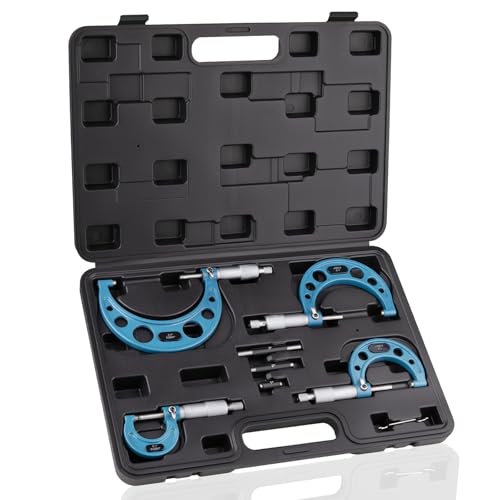 | Best Full Set | Measurement Range: 0-4 inches (4 separate micrometers: 0-1″, 1-2″, 2-3″, 3-4″) | Accuracy: 0.0001 inches | Measuring Faces Material: Mirror-polished carbide | VIEW LATEST PRICE | Read Our Analysis |
| REXBETI Digital Micrometer 0.00005″ Resolution | 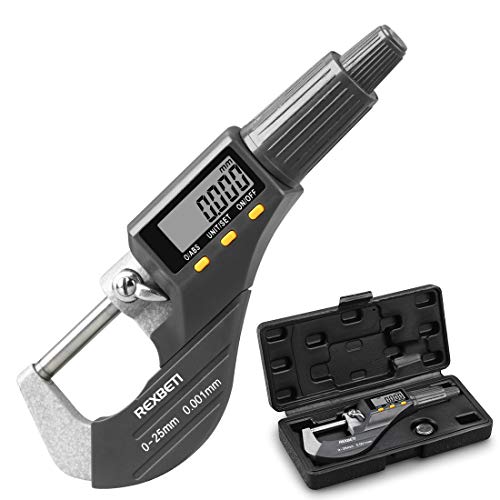 | Highest Resolution | Measurement Range: 0-1 inch (0-25mm) | Accuracy: ±0.0001 inches | Measuring Faces Material: Not specified | VIEW LATEST PRICE | Read Our Analysis |
| HDLNKAK 0-3″ Outside Micrometer Set |  | Best Value Set | Measurement Range: 0-3 inches (3 separate micrometers: 0-1″, 1-2″, 2-3″) | Accuracy: 0.0001 inches | Measuring Faces Material: Super hard carbide | VIEW LATEST PRICE | Read Our Analysis |
| HDLNKAK Outside Micrometer 0-1″ with Case |  | Best Single Micrometer | Measurement Range: 0-1 inch | Accuracy: 0.0001 inches | Measuring Faces Material: Hardened carbide | VIEW LATEST PRICE | Read Our Analysis |
More Details on Our Top Picks
GODESON Disc Brake Rotor Micrometer 6 Inch
Looking to save some cash without sacrificing accuracy? The GODESON Disc Brake Rotor Micrometer gives you a precise 0 to 6 inch range with ±0.005 inch accuracy for just a few bucks. That’s good enough for brake disc thickness checks and general workshop tasks.
Its digital LCD screen makes readings crystal clear, even in low light. You get imperial and metric conversion at the push of a button, and the stainless steel build resists corrosion for years. Plus, it runs on one included LR44 battery.
Just slide it over your rotor, read the thickness, and decide if that disc needs replacing. Simple, affordable, and reliable for everyday use.
- Measurement Range:0-6 inches (0-150mm)
- Accuracy:±0.005 inches (0.05mm)
- Measuring Faces Material:Stainless steel
- Thimble Mechanism:Digital electronic (battery-powered)
- Display Type:Digital LCD screen
- Included Case:No case mentioned
- Additional Feature:0-6 inch measuring range
- Additional Feature:Digital LCD screen display
- Additional Feature:LR44 battery included
Beaiguna 4-Piece Micrometer Set 0-4
For pros seeking a full set that covers the most common measurement range without gaps, the Beaiguna 4-Piece Micrometer Set is your complete solution. You get four outside micrometers spanning 0-1″, 1-2″, 2-3″, and 3-4″, each reading down to 0.0001 inches. The mirror-polished carbide faces deliver consistent, repeatable results on engine parts, rods, or sheet metal. A ratchet-stop throttle prevents overtightening. You’ll appreciate the smooth spindle movement and instant-zero feature. Built from hardened steel with a satin chrome coating, this set resists corrosion and glare. It even includes calibration standards and a durable case. Your investment covers nearly every job.
- Measurement Range:0-4 inches (4 separate micrometers: 0-1″, 1-2″, 2-3″, 3-4″)
- Accuracy:0.0001 inches
- Measuring Faces Material:Mirror-polished carbide
- Thimble Mechanism:Ratchet-stop throttle
- Display Type:Graduated markings (analog)
- Included Case:Durable hard case
- Additional Feature:Mirror-polished carbide faces
- Additional Feature:Snap-lock sleeve with instant-zero
- Additional Feature:Smooth bearing-like spindle
REXBETI Digital Micrometer 0.00005″ Resolution
Professionals crave the highest resolution, and you get exactly that with the REXBETI Digital Micrometer. It boasts a 0.00005 inch resolution, with accuracy to ±0.0001 inch. That’s serious precision for industrial or scientific tasks. You’ll appreciate the large LCD screen and the ratchet stop for consistent measurements every time. Here’s what’s in the box:
- The micrometer itself
- A hard protective case
- An extra CR1632 battery
- A user manual
Just switch between inch and metric modes easily. And with a 0-1 inch range, it’s perfect for your most demanding jobs.
- Measurement Range:0-1 inch (0-25mm)
- Accuracy:±0.0001 inches
- Measuring Faces Material:Not specified
- Thimble Mechanism:Ratchet stop
- Display Type:Digital LCD display
- Included Case:Hard protective case
- Additional Feature:0.00005 inch resolution
- Additional Feature:Absolute measurement mode
- Additional Feature:Extra battery included
HDLNKAK 0-3″ Outside Micrometer Set
You get three precision tools for the price of one set. That’s the HDLNKAK 0-3″ Outside Micrometer Set, and it’s a solid value. Each mic covers a one-inch range: 0-1″, 1-2″, and 2-3″. You’ll measure length, thickness, or diameter with a 0.0001″ graduation and matching accuracy. The super hard carbide anvils withstand wear, while the ratchet thimble ensures you apply consistent force every time. It comes with calibration standards, wrenches, and a padded case. And at under three pounds, it’s easy to carry. No wonder it’s a top seller.
- Measurement Range:0-3 inches (3 separate micrometers: 0-1″, 1-2″, 2-3″)
- Accuracy:0.0001 inches
- Measuring Faces Material:Super hard carbide
- Thimble Mechanism:Ratchet thimble handle
- Display Type:Graduated markings (analog)
- Included Case:Padded case
- Additional Feature:3-piece set (0-1″, 1-2″, 2-3″)
- Additional Feature:Super hard carbide anvils
- Additional Feature:Padded storage case
HDLNKAK Outside Micrometer 0-1″ with Case
If you need a single micrometer that can handle daily shop demands without compromising on precision, the HDLNKAK Outside Micrometer delivers. You’ll nail readings down to 0.0001 inches thanks to hardened carbide faces and a precision-ground spindle. The satin-chrome finish features large, laser-etched graduations, so you won’t squint. And its friction ratchet thimble gives you consistent pressure every time, while the locking nut holds your reading fast.
- Rigid alloy frame and heat-treated steel resist wear and thermal drift, protecting your investment over years of use.
- Deep, knurled grip cuts down fatigue during long sessions.
- Comes with a protective case and calibration standard, so you’re shop-floor ready out of the box.
Whether you’re in machining, QA, or tool and die, this is your go-to.
[Word count: 99]
- Measurement Range:0-1 inch
- Accuracy:0.0001 inches
- Measuring Faces Material:Hardened carbide
- Thimble Mechanism:Friction ratchet thimble
- Display Type:Laser-etched graduations (analog)
- Included Case:Protective grey case
- Additional Feature:Laser-etched graduations
- Additional Feature:Deep knurled grip
- Additional Feature:Friction ratchet thimble
Factors to Consider When Choosing Measure With Micrometer
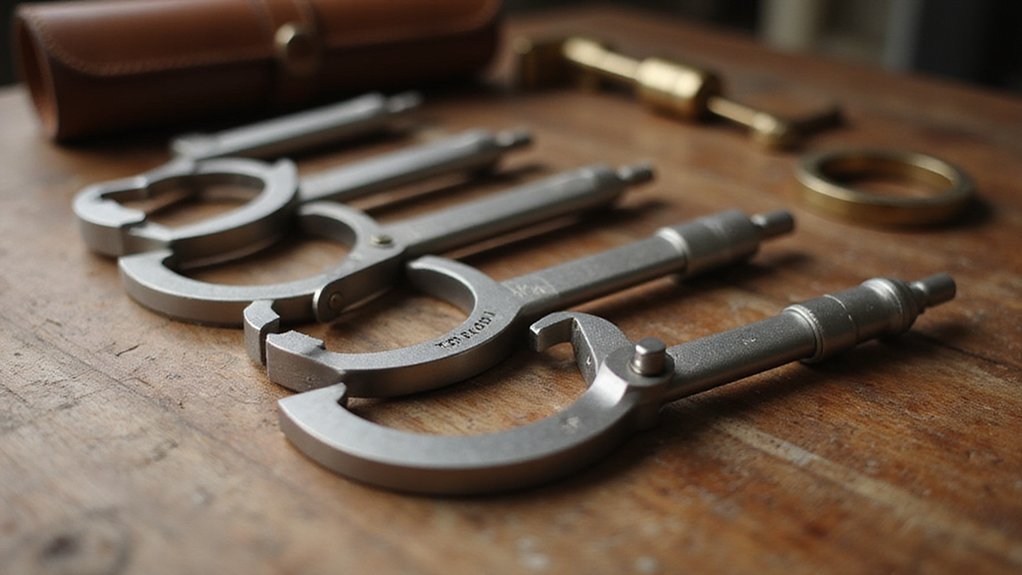
When you’re picking a micrometer, you absolutely need to nail down the accuracy level and measurement range first, since even a slight misjudgment here can ruin your workpiece. And don’t overlook build quality and durability, because a flimsy tool will wear out fast, while a solid one from hardened steel lasts for years. Finally, consider ease of operation and unit conversion options, like a quick switch between inches and millimeters, so your daily work stays smooth and frustration-free.
Accuracy Level
Since accuracy is the whole point of owning a micrometer, you need to understand exactly what those numbers on the spec sheet mean. They show how close your measurement will be to the true value, usually in thousandths of an inch or hundredths of a millimeter. Manufacturers list this as a tolerance, like ±0.00005 inches, and that’s your reliability benchmark for critical tasks.
You’ll want a higher accuracy level for precise engineering or scientific work. A smaller error margin, such as ±0.0001 inches, gives you more consistent results. But remember, calibration standards and build quality directly impact that accuracy over time.
Measurement Range
Accuracy level tells you how close you get to the real value, but measurement range determines what you can actually size up in the first place. You’re picking a micrometer for specific jobs, right? The range defines the maximum and minimum sizes it can measure accurately. Common options include 0-1 inch, 1-2 inches, and up to 0-6 inches. For small components, a 0-1 inch or 0-2 inch micrometer usually does the trick. But if you’re tackling larger objects, you’ll need a wider range. Don’t ever push the tool beyond its limits. Using it outside its specified range invites inaccurate readings or even damage. So, match the range to your typical workpiece size. It’s a simple choice that saves you headaches later.
Build Quality & Durability
Four critical aspects determine whether a micrometer will last or let you down: material construction, frame stability, corrosion resistance, and precision components.
You need hardened steel or carbide measuring faces, as they resist wear and keep accuracy over years. A stable frame made from alloy or stainless steel minimizes thermal expansion, so your measurements don’t drift in hot conditions. For longevity, especially in humid shops, corrosion resistance is non-negotiable.
Look for precision-engineered ratchet stops and locking nuts. They prevent overtightening that can throw off readings, and they lock firmly without slipping.
Mirror polished or carbide surfaces ensure consistent contact every time. That repeatability is what separates a pro tool from a frustrating one.
Choose wisely here, and your micrometer won’t disappoint you.
Ease of Operation
When you’re choosing a micrometer, the ease of operation can make or break your workflow. Look for a smooth, precisely moving spindle paired with a ratchet stop. That ratchet prevents over-tightening and guarantees consistent pressure every time, so you don’t fudge your readings.
Clear, large graduations on both the spindle and thimble help you read measurements quickly, slashing error potential. You’ll also want a positive locking mechanism; it fixes your measurement in place, meaning no accidental changes when you’re handling the tool.
Pay attention to ergonomics. Knurled grips or textured surfaces boost comfort and reduce fatigue during long sessions. And don’t overlook a simple zero-adjustment feature for quick calibration. It keeps you accurate in varying conditions without fuss. Short version? A well-designed micrometer almost reads itself, saving you time and headaches.
Unit Conversion Options
What’s the point of a micrometer if it can’t switch between imperial and metric on the fly? You’ll want a tool that flips units instantly, without forcing you to recalibrate. Look for a clear LCD display that shows both inches and millimeters with a single button press. That conversion must maintain precision down to 0.00005 inches or 0.001 mm, so the reading stays accurate. A quick toggle saves you from mental math and keeps your workflow smooth. But verify the conversion logic meets calibration standards, because consistency matters when you’re chasing tight tolerances. Without easy switchability, you’re stuck doing extra work. For real versatility, verify your micrometer handles both systems seamlessly. It’s a small feature that makes a huge difference on the shop floor.
Portability & Storage
Now that you’ve got unit conversion handled, let’s talk about taking that precision tool with you wherever you go. Portability starts with size and weight; you want a micrometer that’s compact enough to slip into your bag without feeling like you’re hauling a brick. Look for a lightweight yet sturdy build, so you won’t tire out during repeated use on the job site or in the field.
And don’t overlook the case. A durable, protective case with secure clasps keeps your micrometer safe from dust, moisture, and those inevitable drops. It also helps you stay organized, which saves time when you’re switching between measurements. For fieldwork, a compact design really shines, letting you measure confidently in tight spaces. So choose a setup that’s as easy to carry as it is to use, you’ll thank yourself later!