
You might think picking a stepper driver is a boring technical chore. But the right one transforms a jittery machine into a silent, precise workhorse. So, before you wire up that NEMA 23, find out which ten drivers engineers actually trust for CNC and robotics.
| STEPPERONLINE TE Digital Stepper Driver 1.0-4.2A |  | Advanced Safety | Motor Compatibility: Nema 17, Nema 23 | Input Voltage Range: 24-50VDC | Maximum Output Current: 4.2A peak | VIEW LATEST PRICE | Read Our Analysis |
| Stepper Motor Driver for Nema 17/23/34 | 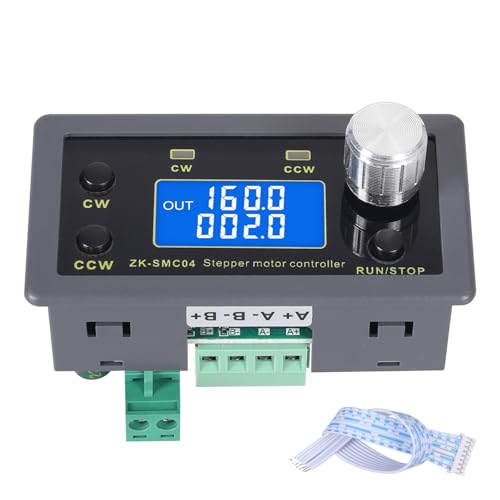 | Most Versatile | Motor Compatibility: Nema 17, Nema 23, Nema 34 | Input Voltage Range: 10-30VDC | Maximum Output Current: 6.6A | VIEW LATEST PRICE | Read Our Analysis |
| Stepper Motor Driver TB6600 4A CNC Controller |  | Budget-Friendly Pick | Motor Compatibility: Nema 17, Nema 23 | Input Voltage Range: 9-42VDC | Maximum Output Current: 4A | VIEW LATEST PRICE | Read Our Analysis |
| STEPPERONLINE Closed Loop Nema 23 Stepper Motor Kit |  | Closed-Loop Precision | Motor Compatibility: Nema 23 (closed-loop kit) | Input Voltage Range: 24-48VDC | Maximum Output Current: 8.0A | VIEW LATEST PRICE | Read Our Analysis |
| STEPPERONLINE CNC Stepper Motor Driver 1.0-4.2A |  | Best Overall | Motor Compatibility: Nema 17, Nema 23 | Input Voltage Range: 20-50VDC | Maximum Output Current: 4.2A | VIEW LATEST PRICE | Read Our Analysis |
| EASON TB6600 Stepper Motor Driver 4A DC9-42V |  | Best Value | Motor Compatibility: Nema 17, Nema 23 | Input Voltage Range: 9-42VDC | Maximum Output Current: 4A | VIEW LATEST PRICE | Read Our Analysis |
| STEPPERONLINE 1 Axis Nema 23 CNC Kit |  | Complete Kit | Motor Compatibility: Nema 23 (kit) | Input Voltage Range: 24-50VDC | Maximum Output Current: 4.2A peak | VIEW LATEST PRICE | Read Our Analysis |
| CNC Digital Microstep Driver DM542 for Stepper Motors |  | Highest Microstepping | Motor Compatibility: Nema 17, Nema 23, Nema 34 | Input Voltage Range: 20-50VDC | Maximum Output Current: 4.2A | VIEW LATEST PRICE | Read Our Analysis |
| STEPPERONLINE TE Series Digital Stepper Driver 1.8-5.6A |  | High-Power Choice | Motor Compatibility: Nema 23, Nema 24, Nema 34 | Input Voltage Range: 24-50VDC | Maximum Output Current: 5.6A peak | VIEW LATEST PRICE | Read Our Analysis |
| Stepper Motor Driver Controller for NEMA 17/23 |  | Beginner Friendly | Motor Compatibility: Nema 17, Nema 23 | Input Voltage Range: 30VDC | Maximum Output Current: Not specified | VIEW LATEST PRICE | Read Our Analysis |
More Details on Our Top Picks
STEPPERONLINE TE Digital Stepper Driver 1.0-4.2A
If you’re building a CNC, 3D printer, or any automation project that demands reliable performance, the STEPPERONLINE TE Digital Stepper Driver is a top contender. It handles Nema 17 and Nema 23 motors with peak current from 1.0 to 4.2A, giving you smooth microstepping control via PUL/DIR. You get 16 selectable microstep resolutions, from 200 up to 25,000 steps, plus pulse inputs up to 200kHz. It automatically identifies your motor and configures parameters, with soft-start to prevent power surges. And you’ll appreciate the anti-resonance technology, which reduces mid-range vibrations and keeps torque maximized. Optically isolated inputs (5V to 24V) make integration easy. Over-voltage, over-current protection, and idle-current reduction keep everything safe and efficient.
- Motor Compatibility:Nema 17, Nema 23
- Input Voltage Range:24-50VDC
- Maximum Output Current:4.2A peak
- Microstep Resolution:16 resolutions up to 25,000 steps
- Protection Features:Over-voltage, over-current, open circuit, idle-current reduction
- Control Interface Type:Optically isolated PUL/DIR
- Additional Feature:Motor winding open circuit detection
- Additional Feature:Anti-resonance technology
- Additional Feature:Soft-start functionality
Stepper Motor Driver for Nema 17/23/34
You need a driver that handles Nema 17, 23, and 34 motors without swapping hardware. This all-in-one controller and driver from BANRIA is your versatile workhorse. It pumps out a beefy 6.6A and accepts 10-30V DC input, making it perfect for CNC machines, 3D printers, or robotic arms.
Its built-in HD LCD display lets you monitor speed, delay, and cycles in real time. You get 15 fixed working modes, including follow mode, jog control, and cycle with set distance. Plus, you can reverse direction manually via button or potentiometer. It even remembers your settings after a power cut. TTL serial communication means easy integration with PLCs or PCs. For heavy lifting across multiple motor sizes, this driver delivers.
- Motor Compatibility:Nema 17, Nema 23, Nema 34
- Input Voltage Range:10-30VDC
- Maximum Output Current:6.6A
- Microstep Resolution:1/64
- Protection Features:Power-off memory
- Control Interface Type:TTL serial, buttons, potentiometer
- Additional Feature:Built-in 15 fixed working modes
- Additional Feature:HD LCD display
- Additional Feature:Power-off memory
Stepper Motor Driver TB6600 4A CNC Controller
The TB6600 4A CNC Controller is our budget-friendly pick for NEMA 23 setups. You’ll get reliable control for small to medium automation gear, like X-Y-Z tables, laser cutters, or pick-and-place machines. It handles dual-phase stepper motors with a voltage range of 9V to 42V and max current under 4A. This driver works with NEMA 23 motors, including 57mm types with 2, 4, 6, or 8 wires. It’s an upgraded version from EBYSAICO, weighing just 0.21 kg with a plastic housing. And with a 4.5 out of 5 star rating from 35 reviews, you’re getting solid performance without breaking the bank.
- Motor Compatibility:Nema 17, Nema 23
- Input Voltage Range:9-42VDC
- Maximum Output Current:4A
- Microstep Resolution:Not specified
- Protection Features:Not specified
- Control Interface Type:Not specified
- Additional Feature:Upgraded version
- Additional Feature:Supports 2/4/6/8 wire motors
- Additional Feature:LCD/LED display
STEPPERONLINE Closed Loop Nema 23 Stepper Motor Kit
NEMA 23 builders craving closed-loop precision should look here first. This STEPPERONLINE kit gives you a 3Nm motor paired with a CL57T driver, supporting up to 8 amps. It’s ideal for CNC routers or dispensers where you need accuracy beyond open loop. You get the motor, driver, RS232 cable for tuning, and two 1.7-meter extension cables. Control voltage runs at 5V, and speed tops out around 100 RPM. Customer ratings hit 4.5 stars from 39 reviews, making this a solid pick for automation projects. Just supply a 24-48VDC power source and you’re set.
- Motor Compatibility:Nema 23 (closed-loop kit)
- Input Voltage Range:24-48VDC
- Maximum Output Current:8.0A
- Microstep Resolution:Closed-loop (not specified)
- Protection Features:Closed-loop feedback
- Control Interface Type:Closed-loop driver with RS232
- Additional Feature:Closed-loop control system
- Additional Feature:Includes RS232 debugging cable
- Additional Feature:Shielded wiring options
STEPPERONLINE CNC Stepper Motor Driver 1.0-4.2A
For CNC builders who value industrial reliability without the industrial price tag, the DM542T stands out as a solid all around performer. You get a wide current range from 1.0 to 4.2A, perfect for NEMA 23 motors, plus voltage support between 20V and 50VDC. The V4.0 version adds a handy 5V/24V logical voltage selector, factory set to 24V. It offers 1/128 micro-step resolution for buttery smooth motion. You’ll appreciate the clear signal compatibility with standard control systems. And with a 4.7 star average from 667 reviews plus a 1 year warranty and lifetime support, it’s a low risk, high reward choice.
- Motor Compatibility:Nema 17, Nema 23
- Input Voltage Range:20-50VDC
- Maximum Output Current:4.2A
- Microstep Resolution:1/128
- Protection Features:Not specified
- Control Interface Type:PUL/DIR (5V/24V selectable)
- Additional Feature:5V/24V logical voltage selector
- Additional Feature:Alarm outputs
- Additional Feature:Factory setting at 24V
EASON TB6600 Stepper Motor Driver 4A DC9-42V
If you’re building a small CNC rig on a budget, the EASON TB6600 gives you plenty of capability per dollar. It drives NEMA 17 or 23 motors, plus 42 and 57 type biphasic units with 4, 6, or 8 wires. Its 9V to 42V input range and 4A current rating handle X-Y-Z tables, laser cutters, and engravers smoothly. You get 32 microstep options (from 1/1 to 1/32) for precision, and the rugged aluminum heat sink keeps things cool. Safety features include over-voltage, under-voltage, over-current, and short-circuit protection. It’s lightweight, durable, and sports a 4.4-star rating from 145 reviews.
- Motor Compatibility:Nema 17, Nema 23
- Input Voltage Range:9-42VDC
- Maximum Output Current:4A
- Microstep Resolution:Up to 1/32 (6 modes)
- Protection Features:Over-voltage, under-voltage, over-current, short-circuit
- Control Interface Type:Not specified (DIP switch configurable)
- Additional Feature:Upgraded protective plastic cover
- Additional Feature:Advanced protection features
- Additional Feature:Large aluminum heat sink
STEPPERONLINE 1 Axis Nema 23 CNC Kit
You get the complete kit for precise CNC control right out of the box. The STEPPERONLINE 1 Axis Nema 23 kit bundles a robust 2.4Nm (339.87oz.in) stepper motor with a DM542TE digital driver. That motor steps at 1.8 degrees, perfect for milling and engraving. The driver handles input from 24 to 50VDC and pushes up to 4.2A peak. So you’re set for accurate positioning. Just wire it up, and you’re good to go. The 57mm frame size fits standard mounts, and the four leads make connections simple. No fuss, no extra shopping. This is a turnkey solution for CNC builders.
- Motor Compatibility:Nema 23 (kit)
- Input Voltage Range:24-50VDC
- Maximum Output Current:4.2A peak
- Microstep Resolution:Not specified (digital driver)
- Protection Features:Not specified (digital driver)
- Control Interface Type:PUL/DIR (digital driver)
- Additional Feature:Includes matching driver
- Additional Feature:2.4Nm holding torque
- Additional Feature:4-lead motor wiring
CNC Digital Microstep Driver DM542 for Stepper Motors
Looking for a driver that handles the highest microstepping levels without breaking the bank? The DM542 delivers, supporting microstepping from 2 all the way up to 256. That’s serious precision for your Nema 23.
This digital driver uses optical isolation for clean signal input, so you won’t get interference issues. It works with 4, 6, or 8 wire steppers, and you dial in the current easily via DIP switches. Power it with 20V to 50V DC, up to 4.2A. And here’s the kicker: POLISI3D backs it with refunds or replacements if defective. You get industrial reliability without the industrial price tag.
- Motor Compatibility:Nema 17, Nema 23, Nema 34
- Input Voltage Range:20-50VDC
- Maximum Output Current:4.2A
- Microstep Resolution:2 to 256 microsteps
- Protection Features:Not specified
- Control Interface Type:Optically isolated TTL/differential signals
- Additional Feature:Optical isolation for signals
- Additional Feature:Bipolar constant current chopping
- Additional Feature:DIP switch adjustable current
STEPPERONLINE TE Series Digital Stepper Driver 1.8-5.6A
The STEPPERONLINE TE Series Digital Stepper Driver is our high-power choice for motion control projects that demand both precision and affordability. You’ll love that it’s an upgraded, cost effective version of the T Series, supporting Nema 23, 24, and 34 motors. It delivers an output peak current from 1.8 to 5.6A with a 24 to 50VDC input.
You get real time motor winding open circuit detection, preventing costly damage. Plus, it features:
- Optically isolated inputs compatible with 5V to 24V signals, simplifying your wiring.
- Anti-resonance and soft start for jerk free motion.
- Auto identification and parameter configuration.
You can dial in up to 25,600 micro steps and 200kHz pulse frequency. It’s a quiet workhorse that won’t break the bank.
- Motor Compatibility:Nema 23, Nema 24, Nema 34
- Input Voltage Range:24-50VDC
- Maximum Output Current:5.6A peak
- Microstep Resolution:16 resolutions up to 25,600 steps
- Protection Features:Over-voltage, over-current, open circuit detection
- Control Interface Type:Optically isolated single-pulse input
- Additional Feature:Motor winding open circuit detection
- Additional Feature:16 micro-step resolutions
- Additional Feature:Automatic idle-current reduction
Stepper Motor Driver Controller for NEMA 17/23
For anyone setting up a CNC machine or custom automation rig, this integrated driver and controller from BANRIA is a solid pick. It’s a combined module for NEMA 17 and NEMA 23 motors, slimming down your wiring and parts list. You get four control modes: built-in parameter work, external button, driver control, or UART commands. It even has nine default presets like Forward, Reverse, and Self-locking, plus speed adjustment up to 999.9 RPM. An LCD screen shows speed, delay, and cycle times, making adjustments a breeze. Weighing only 64 grams, it’s light but capable at 30 Volts. With a 4.3-star rating from 191 reviews, it’s a reliable choice!
- Motor Compatibility:Nema 17, Nema 23
- Input Voltage Range:30VDC
- Maximum Output Current:Not specified
- Microstep Resolution:Not specified
- Protection Features:Not specified
- Control Interface Type:UART, buttons, external control
- Additional Feature:Integrated controller and driver
- Additional Feature:Nine default preset programs
- Additional Feature:Speed control up to 999.9 RPM
Factors to Consider When Choosing a Stepper Driver for Nema 23
Choosing the right stepper driver for your NEMA 23 motor isn’t just about picking a popular name; it comes down to a few critical specs. You’ll need to match the driver’s current range and voltage with your motor, plus decide on a microstep resolution that balances smoothness and torque. Don’t forget to check motor compatibility, verify input signal requirements, and look for solid protection features like overcurrent or thermal shutdown to keep your setup safe.
Current Range & Voltage
Wondering what current and voltage your NEMA 23 stepper driver actually needs? Let’s cut through the guesswork. First, check your motor’s rated current, usually between 1.8A and 5.6A. Your driver’s current range must cover that, and you’ll want precise adjustability to avoid overheating or damage.
Voltage is just as critical. For NEMA 23, you’re typically looking at 24V to 50V. Higher voltage isn’t just for show; it delivers faster motor response and better torque at higher speeds. So match your driver’s voltage support with your power supply’s output. Don’t skimp here. Properly pairing current and voltage is your ticket to ideal performance, efficiency, and safety. It’s that simple: get these right, and your system sings.
Microstep Resolution Options
Now that you’ve nailed down your driver’s current and voltage range, the next big decision is microstep resolution. This determines the tiniest movement increment your motor can make, directly impacting precision. Common options range from 1/2 step to 1/256 step. Higher microstepping, like 1/128 or 1/256, gives you smoother motion and reduces vibration, a godsend for CNC or 3D printing. But there’s a trade-off: very high settings can decrease torque.
You’ll typically configure microstepping via DIP switches or software. So, balance your need for fine control against available torque. For detailed projects, don’t shy away from 1/128 or 1/256 steps, just warrant your driver supports them. Most modern drivers do, letting you dial in the perfect resolution for your application.
Motor Compatibility Check
So, how do you make certain a stepper driver actually works with your Nema 23 motor? First, confirm it supports your motor’s exact wiring: Nema 23s are typically 2-phase (bipolar) with four, six, or eight wires. You’ll need to match the driver’s configuration to avoid connection headaches. Next, check the driver’s current rating. Most Nema 23s run between 2.4A and 4A, so don’t pick a driver that can’t deliver that. Also, verify the voltage range (usually 24V to 50V) aligns with your motor’s needs for smooth performance. And don’t overlook the step angle: most Nema 23 motors have a 1.8° degree step. Ensure your driver handles that for precise positioning. A mismatch here means missed steps and frustration. Get these basics right, and you’re set for a reliable build.
Input Signal Requirements
Before you wire everything up, you need to understand the input signal requirements. Your driver will likely need pulse (PUL), direction (DIR), and enable (ENA) signals to control your NEMA 23 motor accurately. Check the voltage levels: TTL signals from 5V to 24V are common, but some systems require differential signals for noise immunity. Optically isolated inputs are a smart pick here, they block electrical interference that can cause those annoying missed steps. Also, don’t overlook the maximum pulse input frequency. Speeds up to 200kHz are typical, and you’ll need that for high-speed operations. Precise timing and correct voltage levels are non-negotiable for reliable control. Get these right upfront, and you’ll avoid headaches later.
Protection Features Included
You’ll want a stepper driver that packs several essential protection features to keep both your NEMA 23 motor and the driver safe from electrical mishaps. Look for over-voltage, over-current, and short-circuit protection. These guard against unexpected power spikes or wiring faults. Real-time open circuit detection is critical, too, as it prevents damage to the windings during failures. Automatic shutdown or alarm systems alert you instantly to anomalies, saving costly repairs. High isolation resistance, like 500 MΩ on input signals, boosts safety and cuts noise interference. Over-temperature protection ensures reliable thermal management, so the driver doesn’t overheat during long runs. Don’t overlook these safeguards; they’re your first line of defense. Choose a driver that handles these risks, and you’re set for smooth, secure operation.
Cooling & Environment Needs
Three key areas to focus on here: cooling, environmental protection, and thermal management. For cooling, you’ll want a driver with forced fans or beefy heatsinks. High current or continuous operation generates serious heat, so don’t skimp here. Plan for proper ventilation and airflow around the driver to keep temperatures ideal and extend its lifespan.
Environmental protection matters too. Check the driver’s temperature rating, typically 0°C to 40°C, and ensure it fits your workspace. Dust, oil fog, or corrosive gases? Look for an enclosure that shields against them.
Lastly, built-in thermal protection is a lifesaver. It automatically shuts down or reduces current when temps exceed safe limits, preventing damage. That’s peace of mind you can’t ignore!
Control Mode Support
With your driver’s thermal and environmental needs sorted, it’s time to think about how it actually talks to your motion controller. First, confirm it supports your desired control mode—pulse/direction, velocity, or step/dir—to match your application’s needs. For smooth, precise movement, check that it offers multiple microstepping resolutions within that mode. And don’t overlook compatibility with TTL or differential inputs if your system relies on those signaling standards.
You’ll also need to verify the maximum pulse input frequency; it must handle your required speed without hiccups. For maximum flexibility, look for features like mode auto-detection or user-configurable control modes. These simplify integration and adapt to your workflow. A driver that talks your language makes all the difference!