
Some tools are nice to have, others you refuse to run without. Precision makes or breaks your final part, so you grab a reliable touch probe, a sturdy digital caliper, and a trusty dial indicator before you even hit start. Want to know which specific models earn that trust? Keep going.
| SainSmart CNC Router Z-Axis Touch Probe |  | Best for Beginners | Primary Function: Z-axis tool height calibration | Material: ABS and aluminum | Weight: 0.03 kilograms | VIEW LATEST PRICE | Read Our Analysis |
| BTER CNC Automatic Tool Sensor for Routers |  | Precision Pro Choice | Primary Function: Automatic tool length setting and wear detection | Material: Cemented carbide and aluminum alloy | Weight: Not specified | VIEW LATEST PRICE | Read Our Analysis |
| 1/4″ CNC Coolant Mister for Milling Machine |  | Best Cooling System | Primary Function: Coolant mist spray for cooling and lubrication | Material: Aluminum | Weight: 0.46 pounds | VIEW LATEST PRICE | Read Our Analysis |
More Details on Our Top Picks
SainSmart CNC Router Z-Axis Touch Probe
If you’re new to CNC machining, the SainSmart Z-Axis Touch Probe is a great place to start. It works with Grbl and Mach3, including 3018-PRO models, so you’re covered. This probe lets you automate tool height adjustments with a click. No more paper methods. Its range starts at 0.98 inches and goes to infinity. And the build? ABS plastic and aluminum. It weighs just 0.03 kilograms, making it easy to handle. The auto-check function simplifies setup. For tool changes and Z-axis calibration, you’ll save time and gain precision. It’s a smart upgrade for consistent cuts.
- Primary Function:Z-axis tool height calibration
- Material:ABS and aluminum
- Weight:0.03 kilograms
- Compatibility:Grbl and Mach3 CNC controllers
- Durability Feature:Compact durable construction
- Application Environment:CNC router tool setting and calibration
- Additional Feature:ABS and aluminum construction
- Additional Feature:Measurement range 0.98″ to infinity
- Additional Feature:Auto-check setup functionality
BTER CNC Automatic Tool Sensor for Routers
For CNC machinists who demand dead-on accuracy, the BTER CNC Automatic Tool Sensor is the precision pro choice. This isn’t just a tool setter; it’s your automated workflow’s best friend. You get a cemented carbide probe with a repeat positioning accuracy of 0.001mm, so every tool length setting is spot on. It handles wear detection and breakage monitoring through your NC system. Here’s what you’ll love:
- Durability: Aluminum alloy housing with dustproof and waterproof design. A magnet at the bottom keeps it firmly attached.
- Specs: DC 24V, normally closed output, 15N contact force, and about 3 million cycles lifespan. Keep your setting speed between 50-200mm/min.
- Compatibility: Works with most CNC routers and engraving machines using NC output.
And if you ever have an issue, BTER offers refunds or replacements, with support responding within 24 hours. That’s peace of mind you can’t ignore!
- Primary Function:Automatic tool length setting and wear detection
- Material:Cemented carbide and aluminum alloy
- Weight:Not specified
- Compatibility:Most CNC equipment with NC output mode
- Durability Feature:Dustproof, waterproof, 3 million cycle lifespan
- Application Environment:Industrial CNC engraving and machining
- Additional Feature:0.001mm repeat positioning accuracy
- Additional Feature:Dustproof and waterproof design
- Additional Feature:3 million cycle life expectancy
1/4″ CNC Coolant Mister for Milling Machine
You’re looking to keep your cutting process cool and efficient. This 1/4″ CNC Coolant Mister does exactly that, combining cooling, lubricating, and chip blowing in one shot. It’s a game changer for your milling machine, lathe, or CNC center.
Here’s what you get:
- Durable aluminum build that lasts, operating smoothly at 5-7 kgf/cm² air pressure.
- Magnetic base for quick, secure attachment.
- Liquid savings by controlling coolant capacity, so you’re not wasting air tool oil.
It’s lightweight at 0.46 pounds, and with a 4.7 star rating from 35 reviews, machinists swear by it. You’ll cut faster, reduce tool wear, and blow chips away. Simple, effective, and affordable.
- Primary Function:Coolant mist spray for cooling and lubrication
- Material:Aluminum
- Weight:0.46 pounds
- Compatibility:Milling machines, lathes, CNC machining centers
- Durability Feature:Long service life, operates without pressure output
- Application Environment:Metalworking and woodworking equipment cooling
- Additional Feature:Combines cooling, lubricating, chip blowing
- Additional Feature:Magnetic base for attachment
- Additional Feature:Operates without pressure output
Factors to Consider When Choosing Tool for Cnc Machine
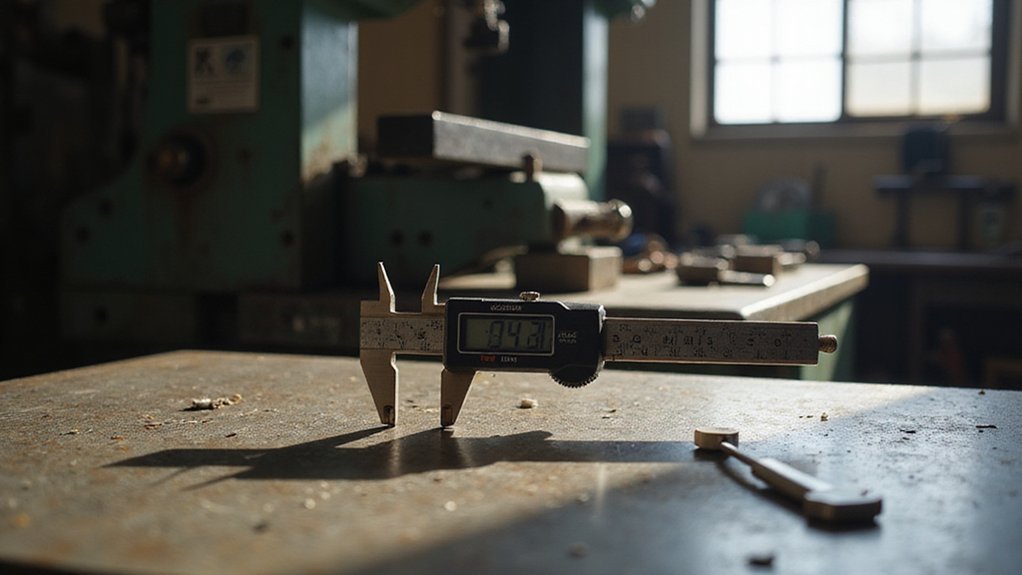
You’ll need to first check that your new tool is compatible with your machine’s software, since a mismatch there will just waste your time. And don’t overlook the probe material’s build quality and measurement accuracy, because even a small error can ruin a precise job. Finally, consider the mounting setup and how the tool handles coolants durability, as a poorly sealed unit will fail fast on a busy shop floor.
Compatibility With Software
Since your CNC tool is only as good as its ability to talk to your machine’s brain, compatibility with your control software is non-negotiable. You need to verify that tool or sensor plays nice with systems like Grbl or Mach3, right out of the box. Check the communication protocol. Does it match your machine’s input requirements? That means verifying things like NC output mode or digital signals.
And don’t stop there. Confirm the tool supports automatic functions your software can handle, like tool height calibration or wear detection. But the real secret? Make sure it communicates effectively with your control system’s firmware version. Review the manufacturer’s specs for software compatibility updates or custom configurations. This future-proofs your setup without any headaches. After all, a tool that won’t talk to your software is just an expensive paperweight!
Probe Material Build
Let’s start with the material build of your CNC probe, because it directly determines how long that tool will hold up under real shop conditions. You’ll often find probes made from hardened steel or carbide, and that’s your best bet for abrasive environments. These materials shrug off dust, coolant, and metal filings like a champ, giving you a longer lifespan and consistent performance.
But if weight is your concern, lightweight options like aluminum or ABS can ease installation, though you’ll sacrifice durability. That tradeoff might work for lighter jobs, but don’t expect them to endure heavy duty cycles.
Here’s what matters most:
- Hardened or carbide probes: Resist wear and last longer in harsh shops.
- Aluminum or plastic: Lighter but less tough, prone to damage over time.
Choose your material based on your shop’s grit, not just initial cost. A durable probe pays off quickly.
Measurement Accuracy
Measurement accuracy is the backbone of reliable CNC work, because it directly controls how well your tool performs on every job. You need repeat positioning accuracy, often measured in microns, to guarantee consistency across hundreds of parts. Without it, your setup errors multiply fast.
Here’s what you should prioritize:
- Advanced sensors with minimal dead zones. These detect even micro shifts, so your tool stays locked on target.
- Environmental resistance. Temperature swings, dust, or vibrations can ruin precision, so choose tools built to withstand your shop’s conditions.
- Proven high rating. A tool that boasts tight specs upfront reduces guesswork and keeps your machining consistent.
Don’t settle for vague claims. A tool that assures micrometer level repeatability saves you hours of recalibration. That’s the difference between scrap and success. Pick wisely, your finish quality depends on it!
Mounting and Setup
Mounting and setup can make or break your CNC operation before the spindle even starts, so compatibility with your machine’s mounting system is nonnegotiable. You’ve got to match the tool to your setup, whether that’s magnetic bases or clamping fixtures. Don’t skip verifying the instructions for secure attachment; a loose tool invites movement and wrecks precision.
Size and weight matter too. A tool that’s too heavy for your spindle mount causes imbalance, leading to poor cuts and potential damage. Look for quick installation features, like tool‑less clamps or indexed slots, so you’re not wasting time during changes or calibration. Your workspace is harsh, so confirm the tool handles dust, coolant, and vibrations without failure.
For a clean setup, prioritize tools with clear locking mechanisms and adjustable stops. Aim for under 30‑second installs. That’s the difference between flow and frustration.
Durability Against Coolants
Certainly! Here’s the modified text with alternative words replacing “significantly” in a contextually relevant manner:
—
Why should coolants be a deal breaker for your tool choice? Because flooding your CNC with liquid without protection turns precision into rust. You need tools made from corrosion resistant materials, like carbide or tools with specialized surface treatments. These coatings fight chemical degradation and thermal wear head on.
Don’t forget the housing. Properly designed seals prevent coolant from infiltrating sensitive internal components, extending your tool’s lifespan markedly. Without them, you’re asking for early failure.
- Choose reinforced coatings: carbide or advanced treatments for superior resistance.
- Inspect seals and housing design to block ingress.
- Replace worn tools quickly; prolonged exposure accelerates damage.
Stick with these picks, and coolants won’t ruin your day. They’ll just keep your cuts clean and your machine running.
Tool Height Range
Now that you’ve got your tools safe from coolant damage, let’s talk about making certain they actually fit your machine. Tool height range sets the maximum and minimum lengths your probe or sensor can accurately measure. You don’t want calibration headaches because your longest drill bit exceeds that limit. Choose a range that matches your typical tooling, from small end mills to hefty drill bits. A broader height range gives you versatility, but you’ll need to check each digital probe’s specific minimum and maximum distances. Confirm your range covers your longest intended tool for safe, precise operation. It’s about avoiding a mismatch that derails your setup. Get this right, and you’ll save time and avoid frustration.
Voltage and Wiring Needs
Let’s get you plugged in — literally. You can’t just assume any tool will work. First, confirm its voltage matches your CNC’s power supply, typically 24V DC. If it doesn’t, your tool won’t operate correctly.
Then, verify the wiring connections. Are they NC (normally closed) or NO (normally open)? Your control system needs that compatibility or you’ll get no signal.
Check if you need extra components like sensors or signal converters for proper integration. And measure the wiring harness length; you don’t want extension issues or signal loss.
Don’t forget insulation. Your wiring must handle moisture, dust, and mechanical stress in industrial settings. Durable wiring beats a shop floor meltdown every time. Make these checks first, and you’ll avoid headaches later.